
Last updated October 16, 2026
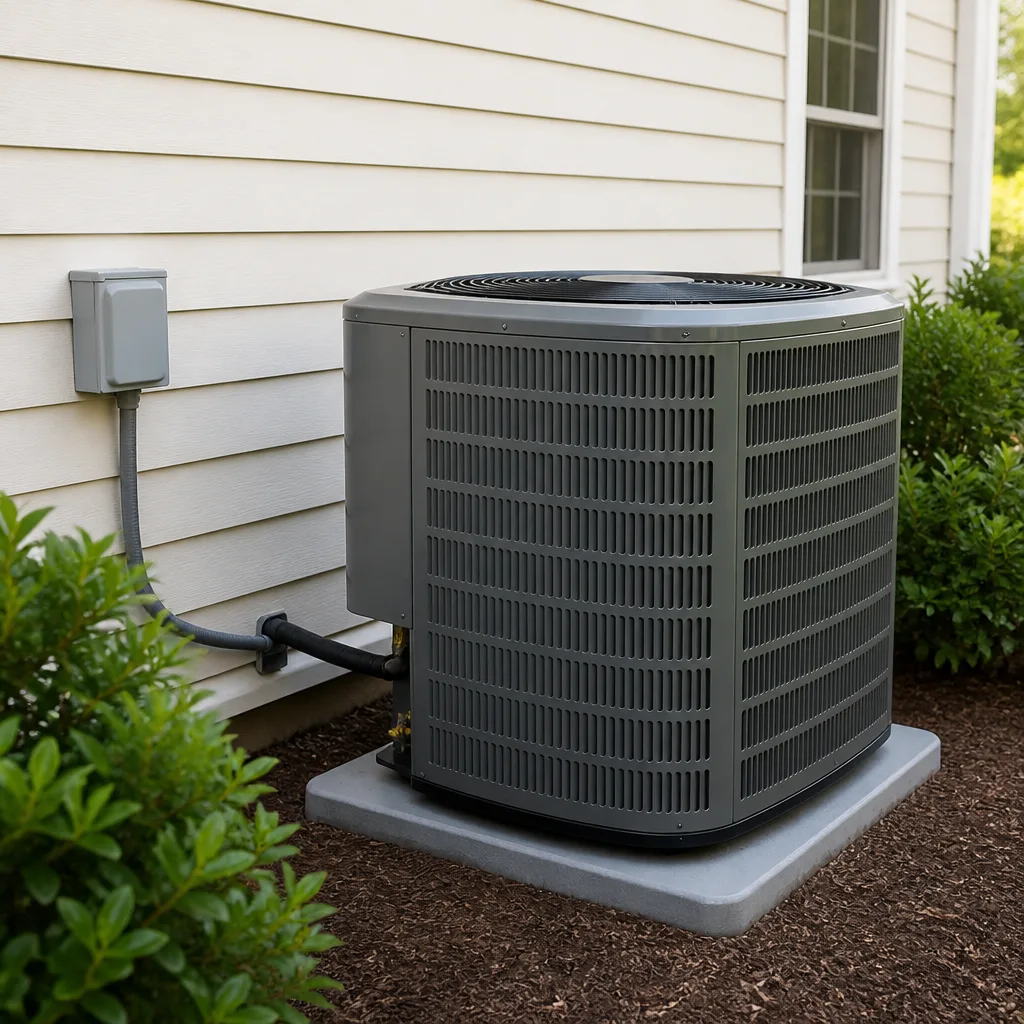 AC repair
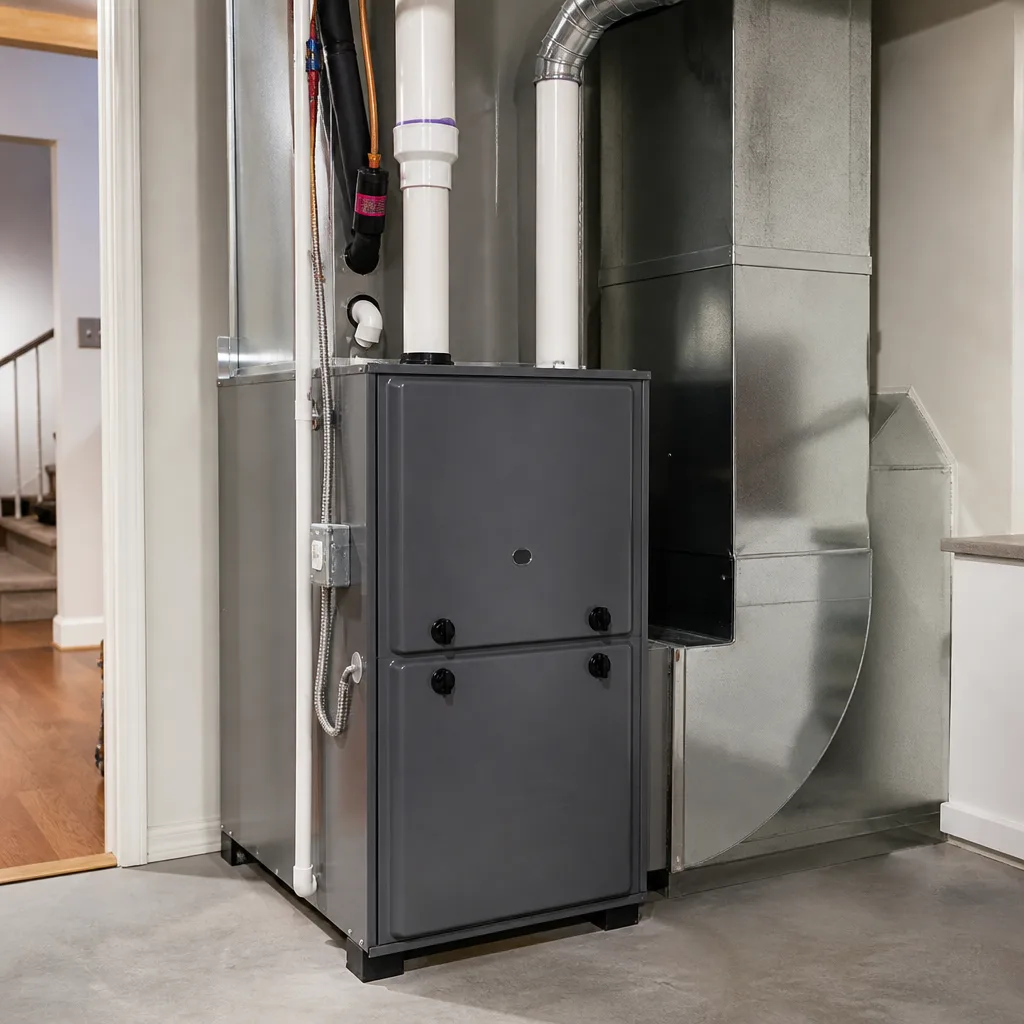 Furnace & heating
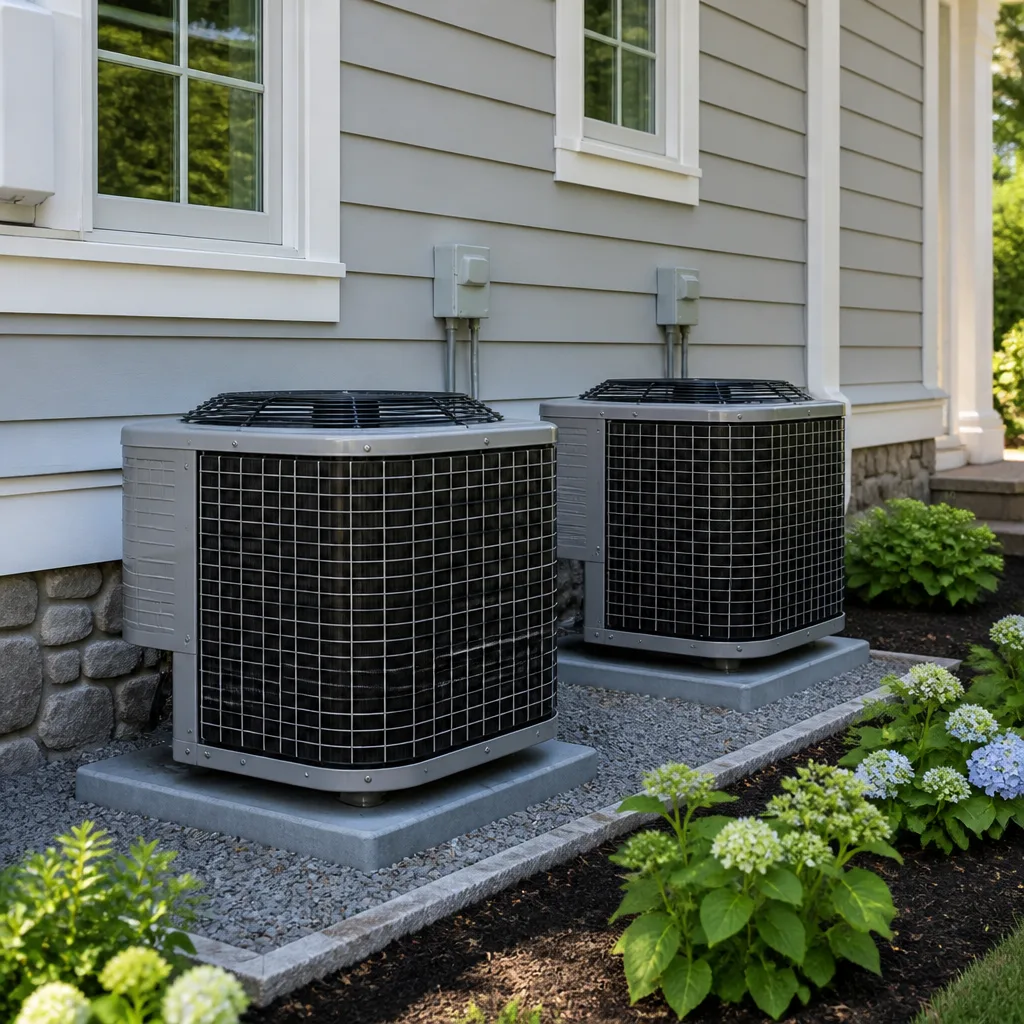 Heat pumps
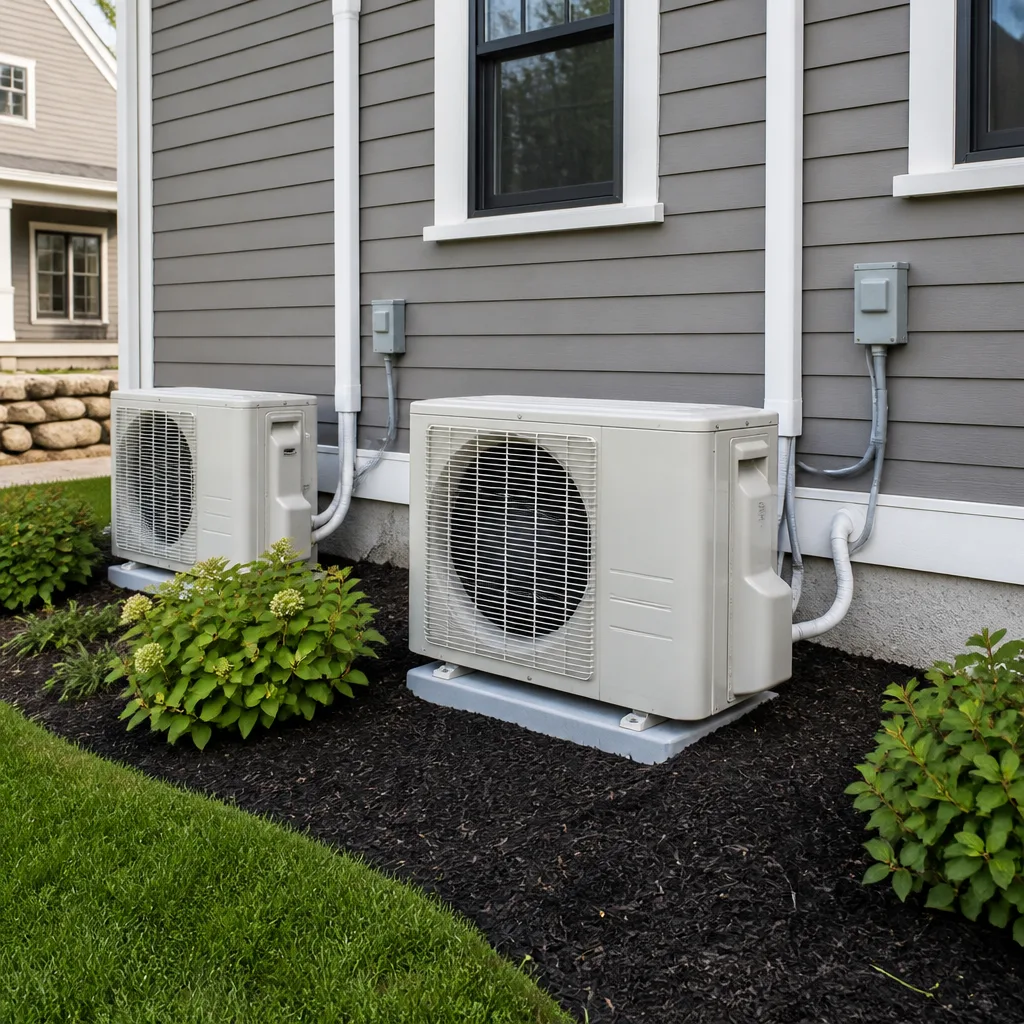 Ductless mini splits
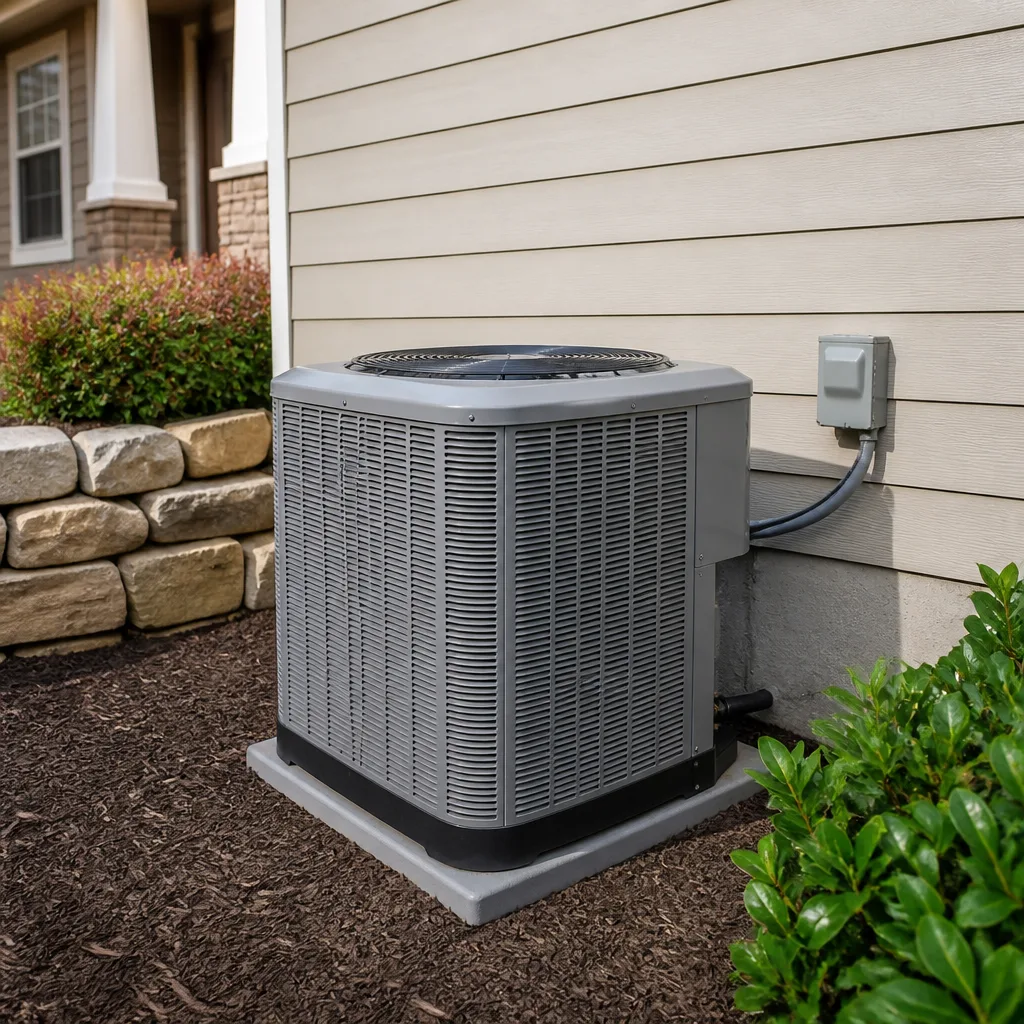 Carrier
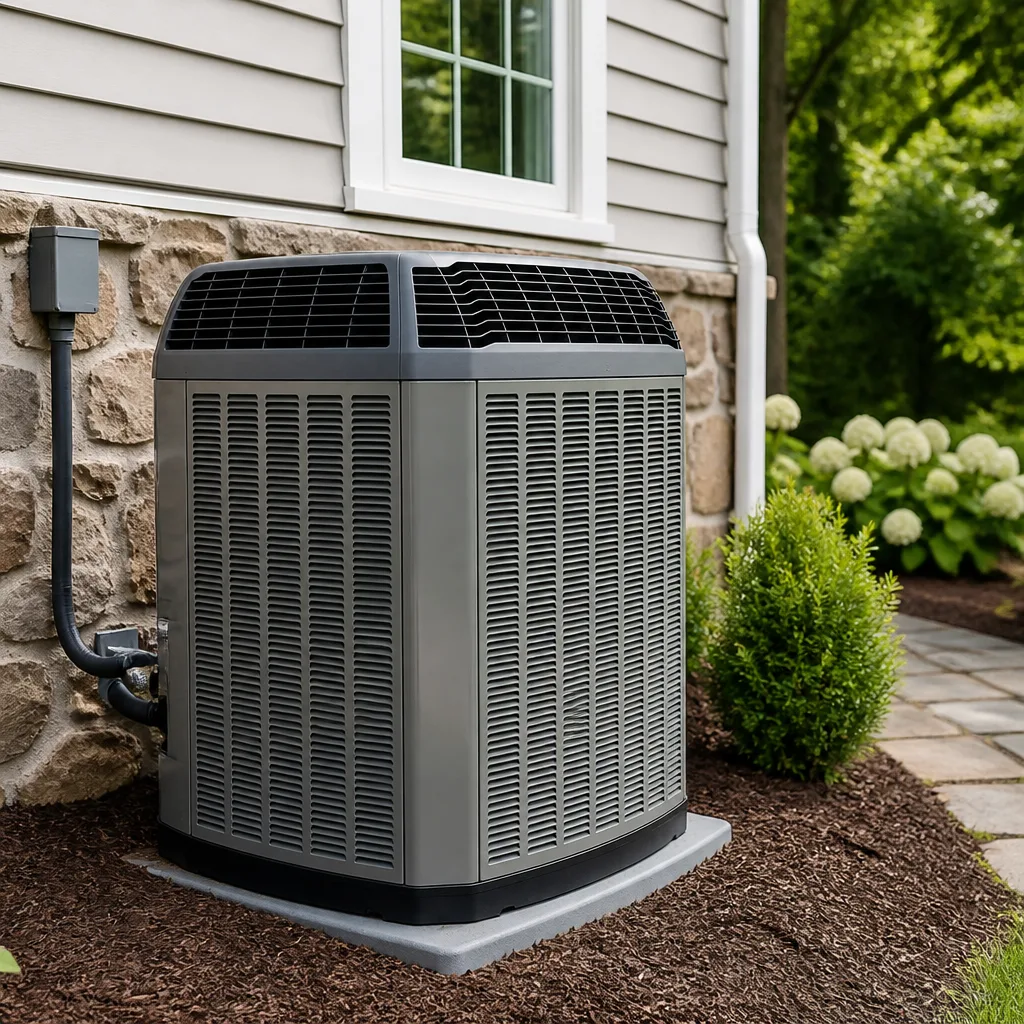 Trane
Trane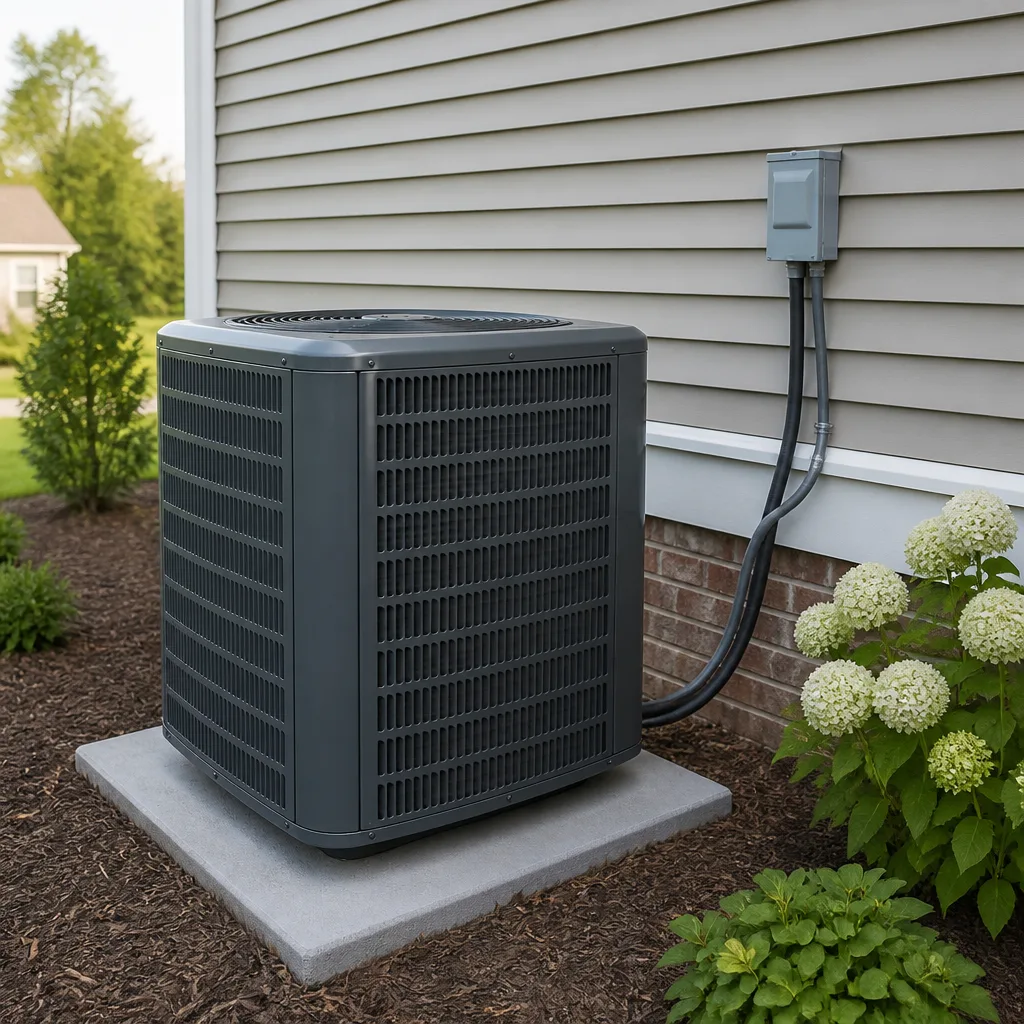 Goodman
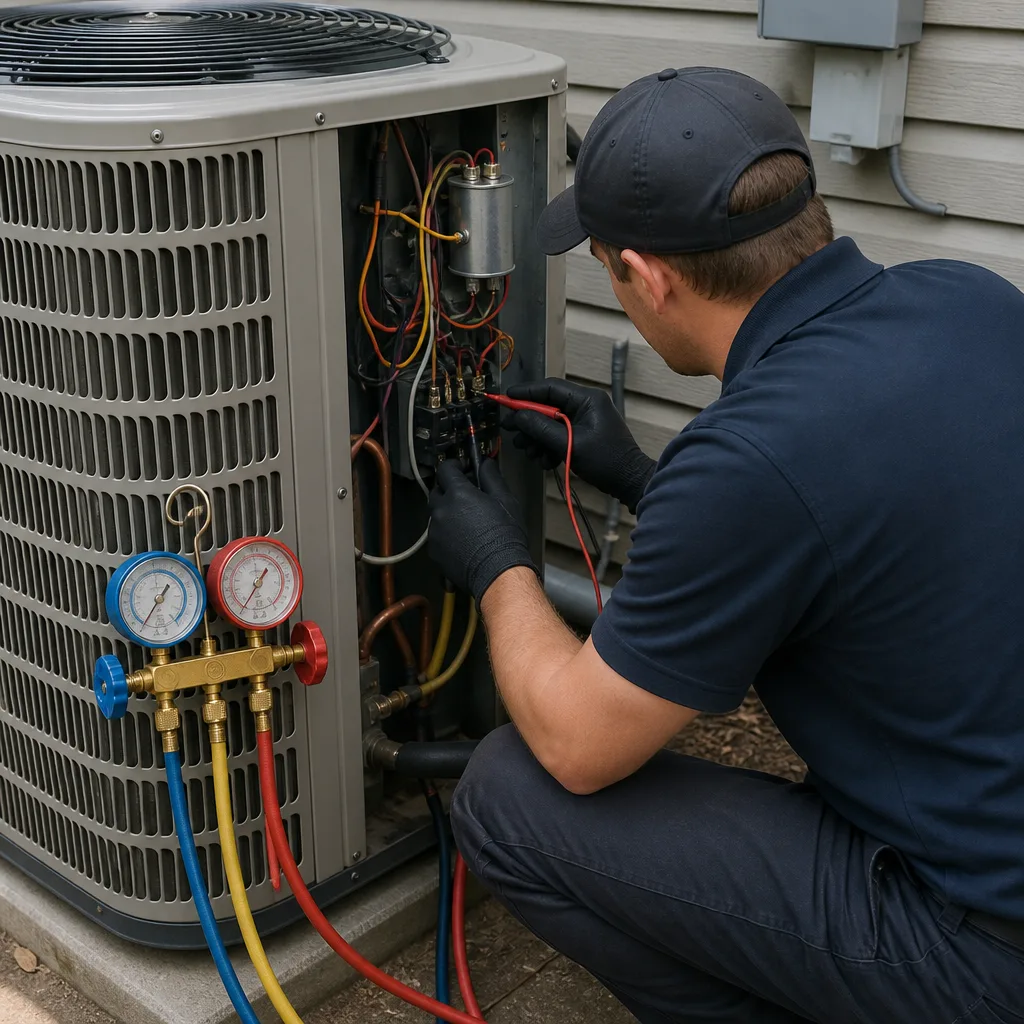
Seasonal tune-up and full diagnostic on your Carrier, Trane, or Goodman system - readings shown to you before any repair is proposed
Diagnosis first, numbers second - you approve the repair price before a single part goes in.
Get your free estimateHVAC Cost Breakdown: The Alpharetta Homeowner’s Reference for 2026
R-410A refrigerant quietly tripled in spot price during the 2025 phase-down, and a handful of Alpharetta contractors absorbed that spike and passed it straight to homeowners on repair invoices without ever mentioning that many of those same systems can be legally retrofitted to a lower-cost refrigerant. If that sentence made you angry, you’re the exact person this guide is for. We’re going to show you real 2026 price brackets for every common HVAC job in this market, explain the three forces actually driving those numbers, and give you a simple method for spotting a padded quote before you sign it. You’ll learn what a fair diagnostic fee looks like in Alpharetta, what refrigerant should cost per pound in 2026, and how to read a written quote like someone who has seen a thousand of them.
Styles & brands we work with
Quick Answer
In 2026, Alpharetta homeowners should budget $95 – $140 for an HVAC diagnostic call, $160 – $290 for a standard capacitor replacement, $190 – $420 for a blower motor service, $180 – $400 for a refrigerant recharge depending on refrigerant type and pounds needed, and $7,800 – $14,500 for a full system replacement under 3.5 tons. These ranges reflect North Fulton labor rates, R-410A versus R-454B pricing splits, and the equipment supply levels we’re actually seeing on trucks this year, not national averages that blur Alpharetta together with markets two states away.
Table of Contents
- What Things Actually Cost in Alpharetta Right Now
- The Refrigerant Situation: R-410A, R-454B, and What It Means for Your Invoice
- Why Alpharetta Labor Rates Run Higher Than Cherokee County
- How to Read a Written Quote for Hidden Margin
- Financing Cost Math: What Same-As-Cash Actually Costs
- Repair or Replace in 2026: The Decision Framework
- What a Full System Replacement Costs in Alpharetta
- Common Mistakes to Avoid
- When to Call a Professional
- Frequently Asked Questions
- The Bottom Line
What Things Actually Cost in Alpharetta Right Now
National HVAC cost guides are nearly useless for Alpharetta. They average together rural Georgia, metro Atlanta, and markets where a technician can park in front of the house instead of circling a Windward neighborhood for a quarter mile. Here’s what we see on real invoices across North Fulton in 2026, with the three brackets and what drives each one.
| Job | Low | Mid | High | What Drives the Spread |
|---|---|---|---|---|
| Diagnostic fee (service call) | $95 | $115 | $140 | Time of day, distance from contractor’s shop, whether it’s a holiday or weekend |
| Capacitor replacement | $160 | $210 | $290 | Capacitor type (single vs dual), access difficulty, markup policy |
| Condenser fan motor | $310 | $430 | $590 | Motor horsepower, brand (OEM vs generic), warranty status |
| Blower motor (furnace or air handler) | $340 | $480 | $720 | ECM vs PSC motor, ECMs run higher and some brands only sell the full module |
| Refrigerant recharge (R-410A) | $180 | $280 | $400+ | Pounds needed, contractor’s 2025 stock vs 2026 reorder price |
| Refrigerant recharge (R-454B) | $240 | $350 | $500+ | System age, leak test included or separate line item |
| Full system replacement (up to 3.5 ton) | $7,800 | $10,500 | $14,500 | Efficiency tier (14 SEER2 vs 18+), brand, duct modifications, crane needs |
A capacitor is the most common “no cooling” fix we see in Alpharetta from May through September. It’s a small cylinder on the outside unit that gives the compressor and fan a jolt to start. When it fails, the outside unit hums and does nothing. The part itself runs $15 – $45 wholesale. The $160 – $290 invoice covers the diagnostic, the part, the install, and the contractor’s time to get there. A company charging $450 for a capacitor is either pricing in a service area that covers two counties or padding. Ask for the line item.
Blower motors are the biggest repair line item most Alpharetta homeowners will see short of a compressor. If your furnace or air handler runs an ECM motor (electronically commutated, which just means it ramps up gradually instead of kicking on at full speed), the motor itself can cost $280 – $550 wholesale. That’s why the bracket tops out near $720. A traditional PSC motor runs lower. Either way, a written quote should show the motor as its own line, not buried in “parts and labor.”
Diagnostic fees are a real point of comparison in this market. Some Alpharetta contractors waive the diagnostic if you approve the repair on the spot. Others apply it toward the repair total. Others keep it regardless. None of these are scams by themselves, but the policy should be stated before the technician arrives. AC repair in Alpharetta starts with a written price before any work begins, which is the standard you should hold any contractor to.
The Refrigerant Situation: R-410A, R-454B, and What It Means for Your Invoice
This is the single most misunderstood cost driver in Alpharetta HVAC right now, and it’s worth understanding cold. The EPA began phasing down R-410A production in 2023 under the AIM Act. New residential systems manufactured after January 1, 2025 ship with R-454B or R-32, which are lower-global-warming-potential refrigerants. R-410A is not being manufactured at the same volume anymore. As stockpiles drew down through 2024 and 2025, spot prices for R-410A cylinders jumped from around $120 per 25-pound cylinder to over $400 in some markets. In 2026, those prices are stabilizing but still elevated compared to the 2020 baseline.
Here’s what that actually means for your invoice.
- If your system was installed before 2025, it almost certainly runs R-410A. You do not need to replace the system just because R-410A is being phased down. Existing systems can be serviced, recharged, and repaired with remaining R-410A supply for years.
- If your system needs a recharge, the invoice should list refrigerant as its own line item: pounds used and price per pound. R-410A in Alpharetta is running $60 – $110 per pound on service invoices in 2026, depending on the contractor’s stock costs. A typical residential system holds 6 – 10 pounds.
- Some R-410A systems can be retrofitted to a drop-in replacement refrigerant like R-454B in certain configurations, but it is not automatic. It requires a qualified technician to assess compatibility, and mixing refrigerants without proper evacuation and oil changes will destroy a compressor. Any contractor offering a “cheap conversion” without explaining the oil and seal compatibility question should be dismissed.
- R-454B systems (new in 2025 and 2026) use a mildly flammable A2L refrigerant. That changes code requirements for sensor placement and clearance. If you’re pricing a new system, the quote should mention R-454B and the associated safety sensor package. That is not an upsell; it’s code.
Here’s the specific thing to watch for, and the reason this guide opened where it did. During the 2025 price spike, a contractor who bought cylinders at $400 each and marked them up 40% could charge $560 per cylinder on top of labor. That same contractor in 2026 might still be quoting R-410A at $150 per pound even though spot prices have settled. Ask this exact question: “Can you show me the refrigerant as a separate line item with the price per pound?” A legitimate operation will show you. One that buries refrigerant in “parts” is asking you to subsidize their 2025 stock decisions.
We service systems from Carrier, Trane, Lennox, Goodman, Rheem, York, Daikin, Bryant, and American Standard, and we see the same refrigerant pricing pattern across all nine brands. The brand does not change the physics or the phase-down timeline.
Why Alpharetta Labor Rates Run Higher Than Cherokee County
Alpharetta labor rates for HVAC work run $15 – $30 per hour higher than Cherokee County and roughly $10 – $20 higher than parts of Gwinnett. That’s not contractor greed. It’s three structural things.
First, North Fulton’s cost of operating a licensed, insured HVAC fleet is higher. Shop space, commercial vehicle insurance, and worker comp all track with the local commercial real estate market. A contractor running trucks out of a Canton shop has lower overhead than one dispatching from anywhere near the GA-400 corridor.
Second, the service density is different. In Alpharetta, a technician might run five calls per day with fifteen-minute drives between them. In Cherokee, the same technician might run four calls with twenty-five minutes between each. Density actually means the Alpharetta technician bills more hours per day, which offsets the overhead. But the skilled labor is harder to retain in North Fulton because the same technician can go work for a commercial HVAC shop in Alpharetta for $5 more per hour, or leave the trade for a warehouse job in the same area that doesn’t require attic work in July. Contractors here pay to keep people.
Third, code and permitting bite differently. Alpharetta enforces its own mechanical code amendments on top of Georgia state code. A change-out in Alpharetta may require a mechanical permit pull and a final inspection, depending on scope. That’s a real line item: $75 – $250 depending on the job. Contractors who skip permits on work that requires them are saving the homeowner nothing except exposure to a failed resale inspection later.
What you’re paying for in that labor difference is a technician who shows up inside a stated window, does the work to code with a permit where required, and has the backup of an office that answers the phone when something fails at 9 p.m. in August. That last part is not free to provide. We staff live phones 24/7 because a compressor that fails on a Sunday afternoon in Alpharetta is not a Monday problem. That’s a business decision that costs money, and it shows up in the labor rate. It should show up in the labor rate. The quote that’s cheapest on labor is usually cheapest on the things you can’t see until month eighteen.
How to Read a Written Quote for Hidden Margin
Every legitimate HVAC quote in 2026 should be in writing and itemized enough that you can see what you’re buying. Here are the four places contractors hide margin, specifically in this market, and the right way to push back on each.
- The dispatch fee that doesn’t apply to the repair. Some contractors charge a $39 – $79 “dispatch fee” on top of the diagnostic and then do not apply it to the repair total. That’s a second fee for the same truck roll. Ask: “Does the dispatch fee come off the repair total?” If it doesn’t, you’re paying for the privilege of getting the quote.
- The system efficiency add-on with no measurable outcome. This is a line item like “high-efficiency coil treatment” or “system optimizer calibration” for $150 – $300. If the technician cannot show you a before-and-after measurement (static pressure, temperature split, amp draw), it’s margin with a brochure attached. A real measurement takes ten minutes and produces numbers.
- The warranty upgrade that duplicates manufacturer coverage. Most new equipment comes with a 10-year parts warranty from the manufacturer once registered. A contractor who sells you a “$900 extended labor plan” on day one is often selling something you would only benefit from in years 11 and beyond, and you may not even live in the house then. Ask what year the extended plan actually kicks in. If the answer is “immediately,” ask what it covers that the manufacturer’s registered warranty does not.
- The refrigerant line priced by the job, not the pound. Covered in the refrigerant section above, but it bears repeating: if the quote says “refrigerant: $389” without pounds or price per pound, that’s a number someone picked out of the air. The invoice should say “5 lbs R-410A @ $85/lb = $425” or it should say nothing at all.
A fair Alpharetta quote reads like a receipt, not a menu. Line items, quantities, unit prices, and a total. The Garrison Standard we operate under means the price is in writing before any work starts, on every job, without exception. If a contractor resists putting a number in writing before touching your system, that’s not a scheduling problem. That’s a policy problem.
Financing Cost Math: What Same-As-Cash Actually Costs
Suppose you’re quoted $9,000 for a full system replacement in Alpharetta. The salesperson offers 18 months same-as-cash financing through a third-party lender, maybe GreenSky or Wells Fargo’s home improvement arm. The pitch sounds free. It is not, in most cases, free. Here’s the math the pitch skips.
Same-as-cash works through deferred interest. The lender approves you for, say, $9,000 at 0% for 18 months. You make minimum payments, which are often set at 1.5% of the balance or less. If you pay the full $9,000 within 18 months, you owe no interest. If you don’t, the interest for the entire 18 months is added retroactively at the contract rate, which on these products commonly runs 26.99% APR. On a $9,000 balance with a $5,000 remaining at month 19, that retroactive charge can be $3,000 or more. That’s not a penalty. It’s the contracted interest, applied all at once.
Here’s the specific way to use this in contractor comparison:
- Ask for the total interest that will accrue if you only make minimum payments and take 24 months to pay it off.
- Ask whether the same-as-cash is built into the system price. Some contractors absorb the merchant fee. Others add 3 – 6% to the system price to cover it and do not tell you.
- Compare the cash price against the financed price line by line. If the financed quote is $500 higher on the same equipment, that’s the merchant fee. Pay cash or use a different lender.
For many Alpharetta homeowners, a HELOC at 7 – 8% beats deferred-interest HVAC financing by a wide margin, provided you’re disciplined about paying it down. The same-as-cash pitch is fine if you have the cash and just want to hold onto it for 17 months. If you don’t have the cash at month 18, the financing is the most expensive part of the job.
Dalton Heating & Air Alpharetta includes financing paperwork assistance with every system quote, but we tell every customer the same thing: read the retroactive interest clause before you sign a same-as-cash offer. The math is public. The clause is in 9-point type.
Repair or Replace in 2026: The Decision Framework
There is a rule of thumb in this trade, and it’s wrong often enough that we’ll explain it instead of repeating it blindly. The rule says replace when repair cost times system age divided by 5,000 exceeds 1. That formula was built for a market where replacements were $5,000 and repairs were $200. Neither number describes Alpharetta in 2026.
In North Fulton, we tell homeowners to replace when three of these five things are true:
- The system is 12 years or older. Average life in the Alpharetta climate is 12 – 16 years. The humidity and the pollen season both work the coil harder than in a dry climate.
- The repair is a compressor or a heat exchanger. A compressor on an 11-year-old system is a $1,800 – $2,600 repair. Put that into a system that’s already past warranty, and you’re paying a third of a replacement price to buy maybe three more summers.
- The system uses R-410A and has a known leak. You can still recharge R-410A in 2026, but the price per pound is not going down. A system leaking two pounds per season is burning $150 – $200 per year in refrigerant alone.
- The SEER rating is 13 or below. A 2026 minimum-efficiency system is 14.3 SEER2 in the South, roughly. A 10 – 13 SEER system from 2008 is costing you 25 – 40% more electricity per cooling season than a new 16 SEER2 unit would.
- You’re repairing the same component twice in 18 months. Two capacitor replacements a year apart is not a system problem. Two refrigerant leak repairs in 18 months is a sign the coil is fatigued. That’s replacement territory.
If only one of those is true, repair. A $300 capacitor on a 2019 system is the right call. A $2,200 compressor on a 2014 system in a house you’re selling in three years is the right call. A $1,900 compressor on a 2012 system in a house you plan to keep through 2035 is a coin flip that leans replace, and heat pump installation in Alpharetta is the most common replacement we quote for that scenario.
What a Full System Replacement Costs in Alpharetta
A complete system replacement means indoor unit, outdoor unit, line set (usually), thermostat (often), and the labor to do all of it. The Alpharetta price brackets for 2026, with what you get at each tier, are outlined in our seasonal HVAC care guide:
The $7,800 – $9,500 bracket. This is a 14.3 – 15.2 SEER2 single-stage system from a value brand like Goodman or a builder-grade line from Bryant or American Standard. Single-stage means it runs at full capacity or off. It will cool the house. It will not modulate, and it will be louder than higher tiers. This is the right system for a starter home or a house you expect to sell within five years. The equipment itself is reliable; the efficiency is just the minimum allowed to be sold.
The $9,500 – $12,500 bracket. This is a 16 – 17 SEER2 two-stage or variable-speed system, often from Daikin, Bryant, or American Standard’s mid-tier lines. Two-stage means it runs at a lower capacity on mild days and ramps up when it gets hot. You’ll notice better humidity control in Alpharetta’s July, and that’s the real reason people buy this tier. The thermostat usually gets upgraded to a communicating model that the system talks to digitally.
The $12,500 – $14,500+ bracket. This is 18 – 20+ SEER2 variable-speed equipment from the top lines of Daikin, American Standard, or Carrier. At this level, you’re also pricing duct modifications, zoning, or air quality add-ons like a media filter cabinet or a dehumidifier. The variable-speed blower moves air at exactly the rate needed, which is quieter and better for humidity, but the honest payback math is that you’re buying comfort, not recovering the full price through utility savings in Alpharetta’s rate environment.
Every quote at every tier should show the equipment model numbers, the SEER2 rating, the coil match (indoor and outdoor units are matched for efficiency; a mismatched coil voids the rating and sometimes the warranty), the freon type, the permit cost, and the install date. If any of those are missing, ask. If the answer is vague, get another quote. We put model numbers and written pricing in front of every Alpharetta homeowner before the work starts, because The Garrison Code we operate under says the price is in writing before any work begins. For more guides & resources on protecting yourself as a homeowner, visit our blog. That’s not a promise we make. It’s a rule we follow.
Common Mistakes to Avoid
- Accepting a verbal quote. If the price is not in writing before work starts, the price does not exist. Verbal quotes in Alpharetta are the number one source of “the bill was higher than the quote” complaints we hear from new customers who fired their last contractor.
- Approving a refrigerant recharge without asking where the leak is. Refrigerant does not get used up. It leaks. Adding refrigerant without finding and repairing the leak is renting time, and with R-410A prices where they are in 2026, it’s expensive rented time.
- Comparing quotes by total price without checking equipment model numbers. A $9,200 quote for a 14 SEER2 Goodman is not a better deal than a $11,400 quote for a 17 SEER2 American Standard. You’re comparing different things.
- Paying for a warranty upgrade on day one without reading what the manufacturer covers. New equipment carries a 10-year parts warranty when registered. The $900 “extended protection” plan may duplicate what you already have.
- Skipping the permit on a replacement. In Alpharetta, a mechanical permit is required for a change-out. Unpermitted work becomes your problem at resale. A contractor who says the permit “isn’t necessary” is choosing short cuts over code.
- Financing a system with deferred interest and no plan to pay it off before the term ends. You are one missed month from the full retroactive interest bill. The same-as-cash offer is only same-as-cash if it’s actually paid by month 18.
- Putting off a $30 filter change until it becomes a $400 service call. Clogged filters freeze coils. Frozen coils trip the system. The service call that follows is avoidable. We see it in Alpharetta every single pollen season, which runs roughly February through late April here.
When to Call a Professional
Some HVAC symptoms are DIY-diagnosable: a thermostat with dead batteries, a tripped breaker that stays reset, a filter that’s clearly clogged. Then there are the situations where a homeowner should not touch the equipment. If your outdoor unit is making a grinding or shrieking sound, the compressor or fan bearings are failing and running it makes the repair worse. If you smell burning from the vents, a blower motor or electrical component is overheating, and that’s a fire risk, not a filter problem. If the system is short-cycling (kicking on and off every few minutes), the compressor is overworking, and every additional cycle shortens its life. If you see ice on the outdoor unit or the copper line in summer, that’s a refrigerant or airflow problem, and running the system while frozen can slug the compressor with liquid refrigerant, which destroys it. None of these are things to fix from a YouTube video. Dalton Heating & Air Alpharetta offers free estimates in Alpharetta. Call (229) 537-2086 and a live person answers, day or night.
Frequently Asked Questions
A full system replacement in Alpharetta runs $7,800 – $14,500 in 2026, with the most common mid-tier two-stage system landing around $10,500 – $12,000. The spread is driven by efficiency tier, brand, and whether ductwork modifications or air quality add-ons are included. Call (229) 537-2086 for a written, line-itemed quote on your specific house and system size.
Yes. R-410A is still available for servicing existing systems in 2026, but it’s more expensive than it was in 2020, and per-pound pricing on service invoices in Alpharetta is running $60 – $110 depending on the contractor’s stock position. New systems manufactured after January 1, 2025 ship with R-454B or R-32 instead.
A diagnostic fee in Alpharetta runs $95 – $140 in 2026, and some contractors apply it toward the repair if you approve the work. The fee should be stated before the technician arrives. Written pricing before any work begins is the standard at Dalton Heating & Air Alpharetta, and it applies to diagnostics too.
Replace when the system is 12 years or older, the failing part is a compressor or heat exchanger, or you’re repairing the same component twice in 18 months. Repair when the system is under 10 years old and the repair is a capacitor, contactor, or fan motor. A 2019 system with a bad capacitor is a $200 repair. A 2012 system with a bad compressor is a replacement conversation.
Alpharetta HVAC labor rates run $15 – $30 per hour higher than Cherokee County due to North Fulton’s higher commercial cost structure, tighter code enforcement, and the cost of retaining skilled technicians who can also work commercial jobs in the same area. You’re paying for a technician who shows up inside the window and does the work to code, with a permit where required.
The R-410A phase-down, mandated by the EPA’s AIM Act, reduced production volume starting in 2023. As stockpiles drew down through 2025, wholesale cylinder prices spiked before settling in 2026. Your invoice should show refrigerant as a separate line item with pounds and price per pound. If it doesn’t, ask for the breakdown. Call (229) 537-2086 if you want a second opinion on a refrigerant quote you’ve received.
The Bottom Line
Alpharetta HVAC pricing in 2026 is not mysterious. It’s refrigerant chemistry, labor economics, and quote transparency, all of which you now understand well enough to negotiate from a position of knowledge. The diagnostic runs $95 – $140. A capacitor is a $200 job, not a $450 one. A full system runs $7,800 – $14,500 depending on what you’re asking it to do. The contractor should show you refrigerant as a line item, put the price in writing before the first tool comes off the truck, and tell you the permit will be pulled. If they won’t, you have your answer. If they will, the quote will read like an honest receipt. Dalton Heating & Air Alpharetta home is where you’ll find a crew that operates that way, on every job, without exception. For furnace repair in Alpharetta or any other HVAC work, the standard is the same: written price, on-time arrival, and a full-year written guarantee on every repair.
Written by Marco Benitez, Owner at Dalton Heating & Air Alpharetta, serving Alpharetta since 2003.
See the difference
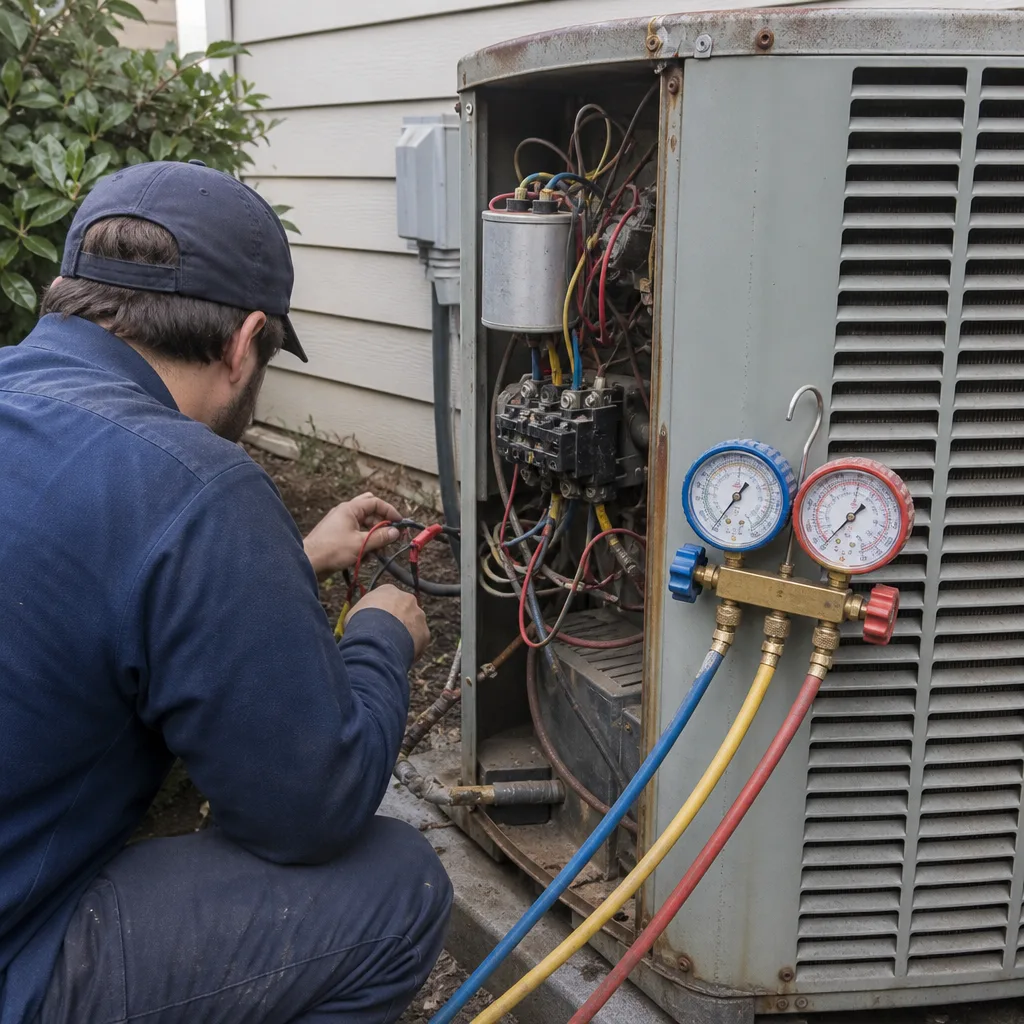 Before
 After
After Before
 After
After Before
 After
After