
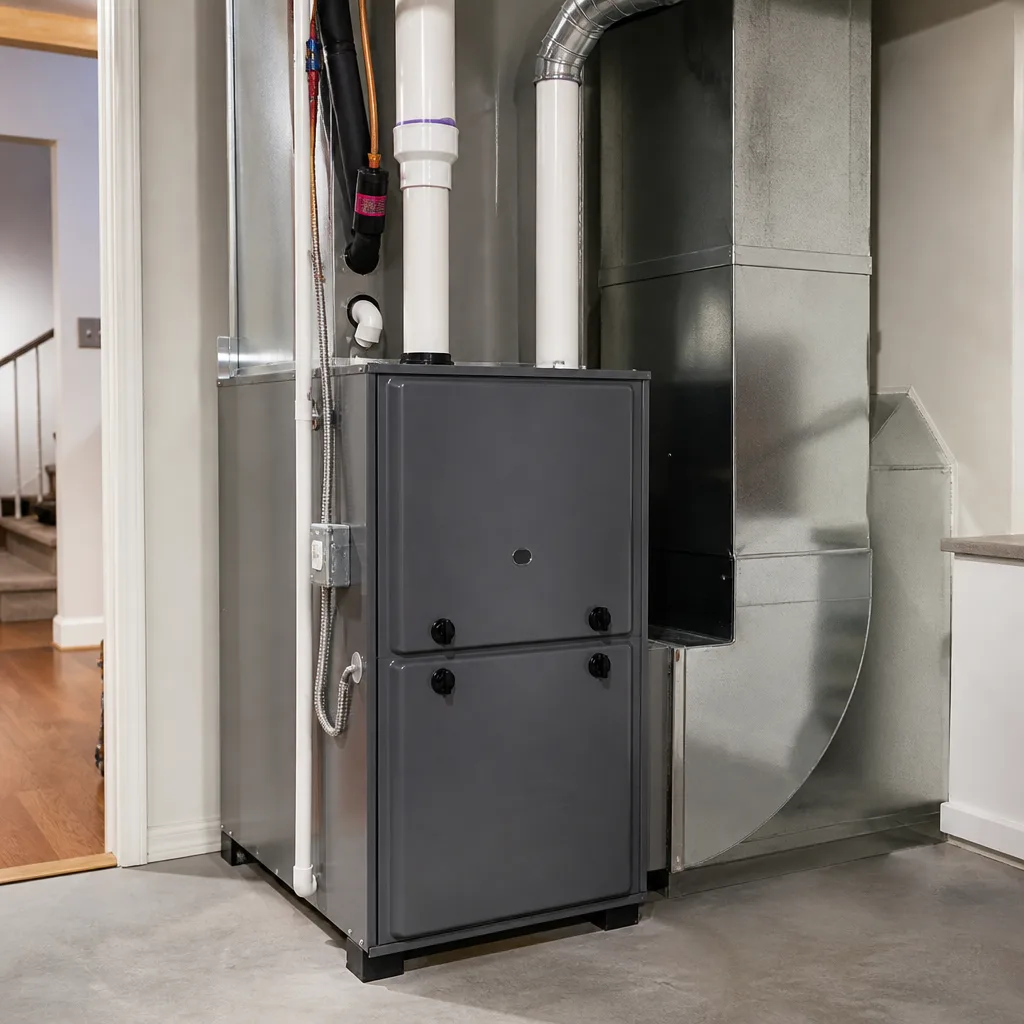
 Furnace & heating
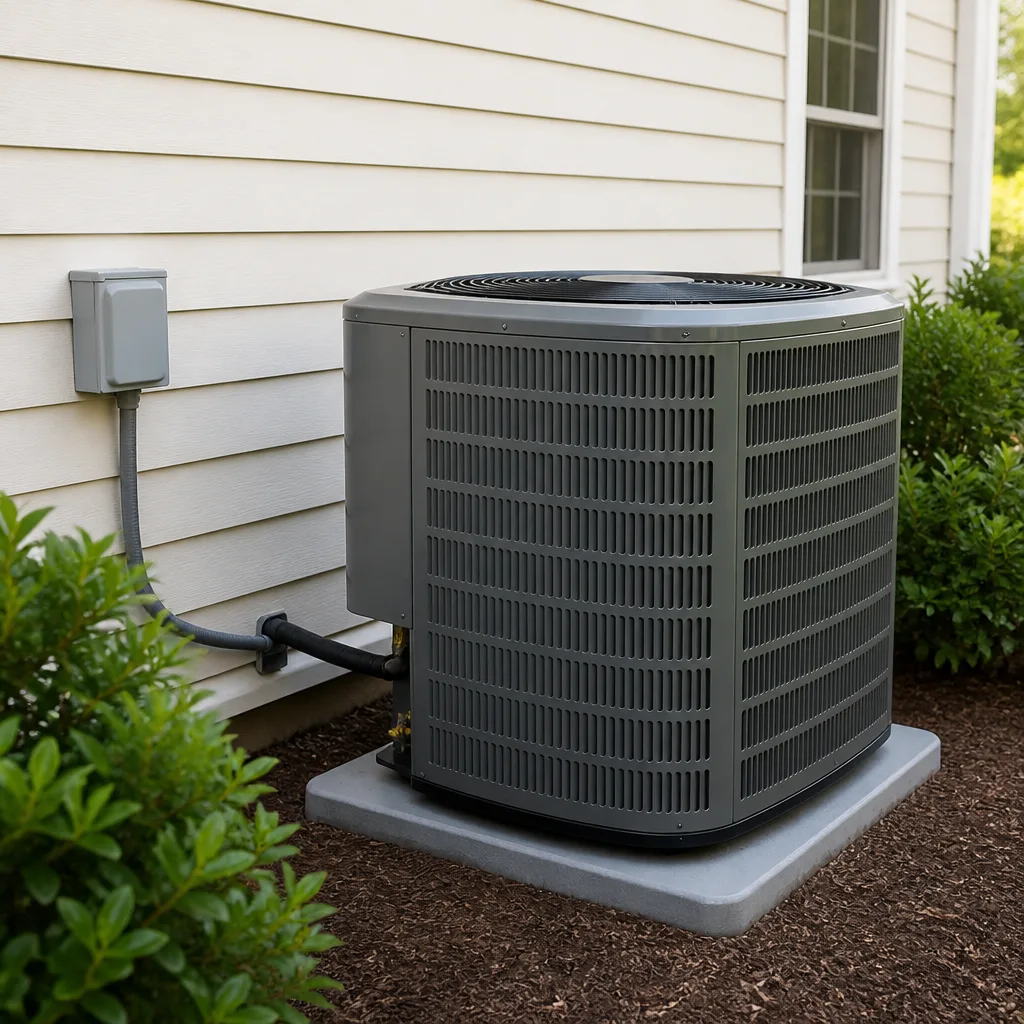 AC repair
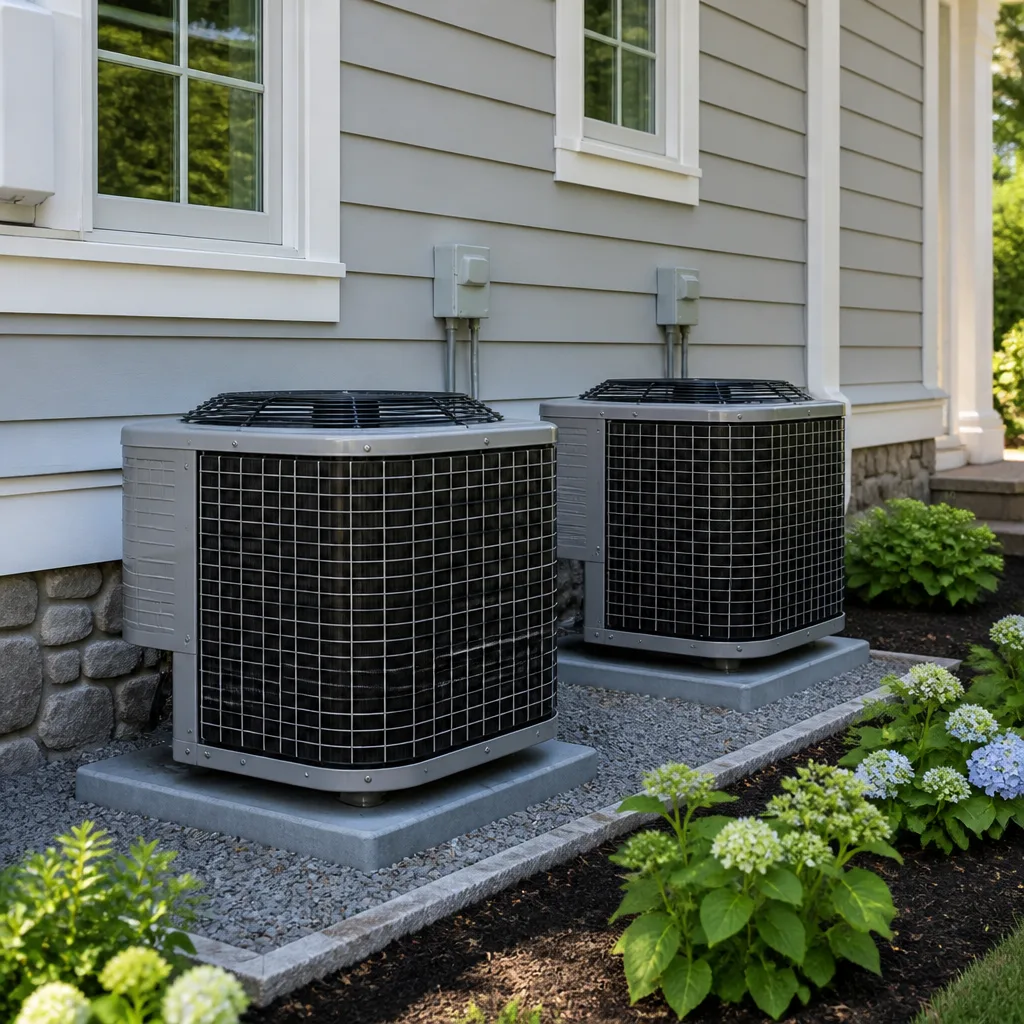 Heat pumps
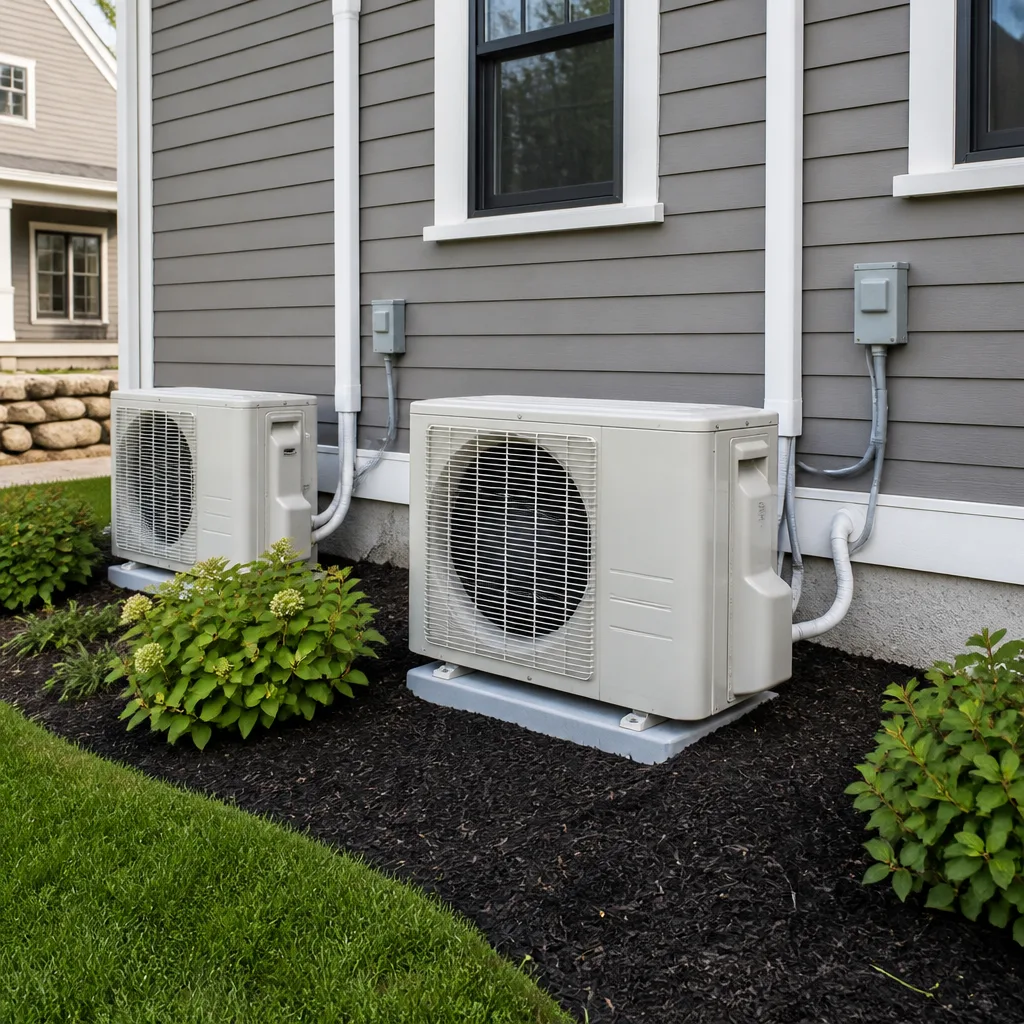 Ductless mini splits
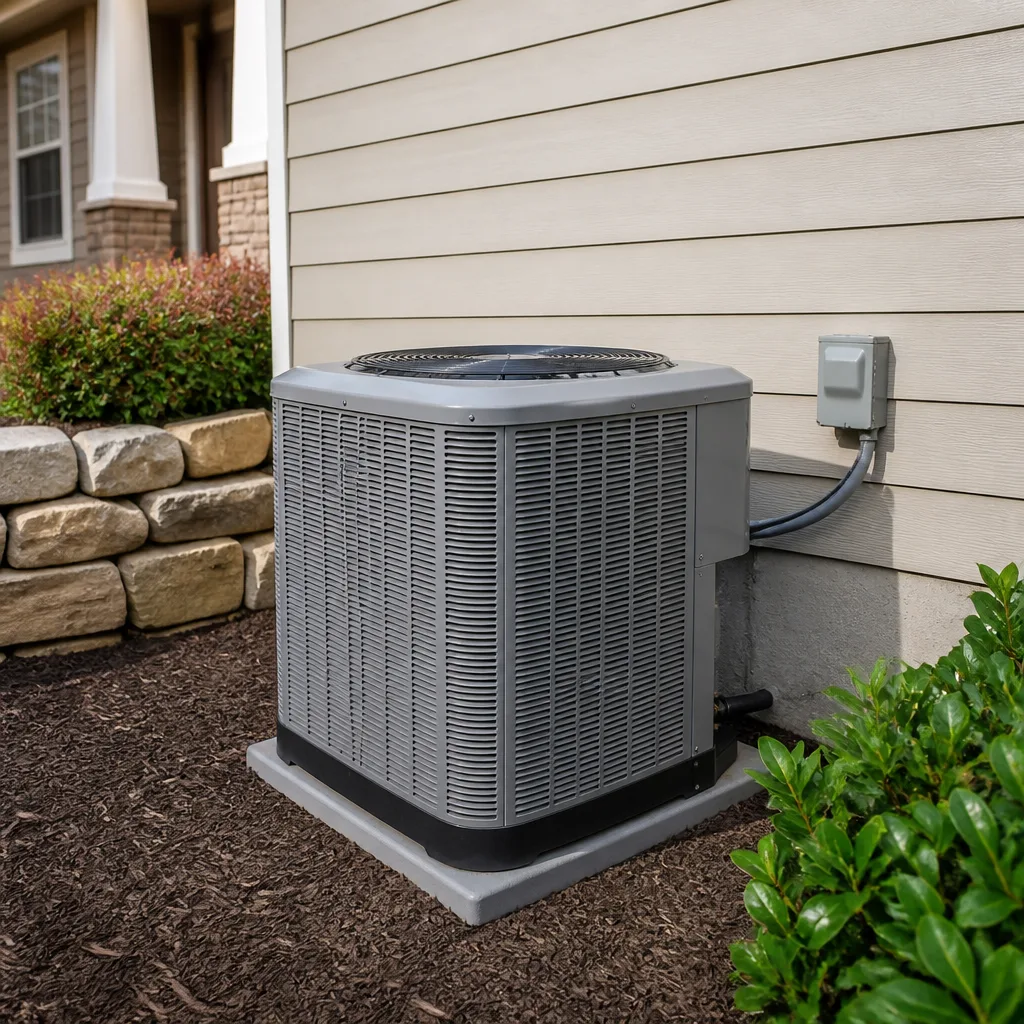 Carrier
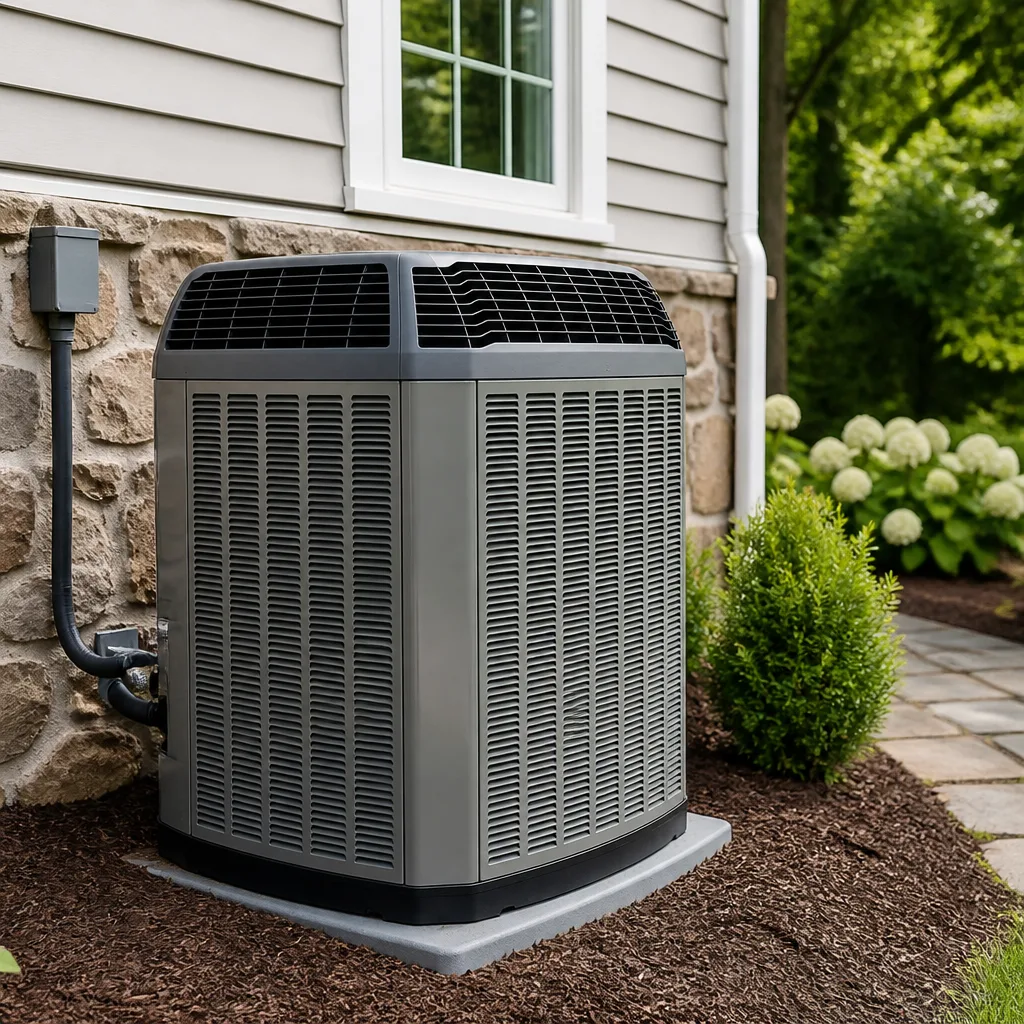 Trane
Trane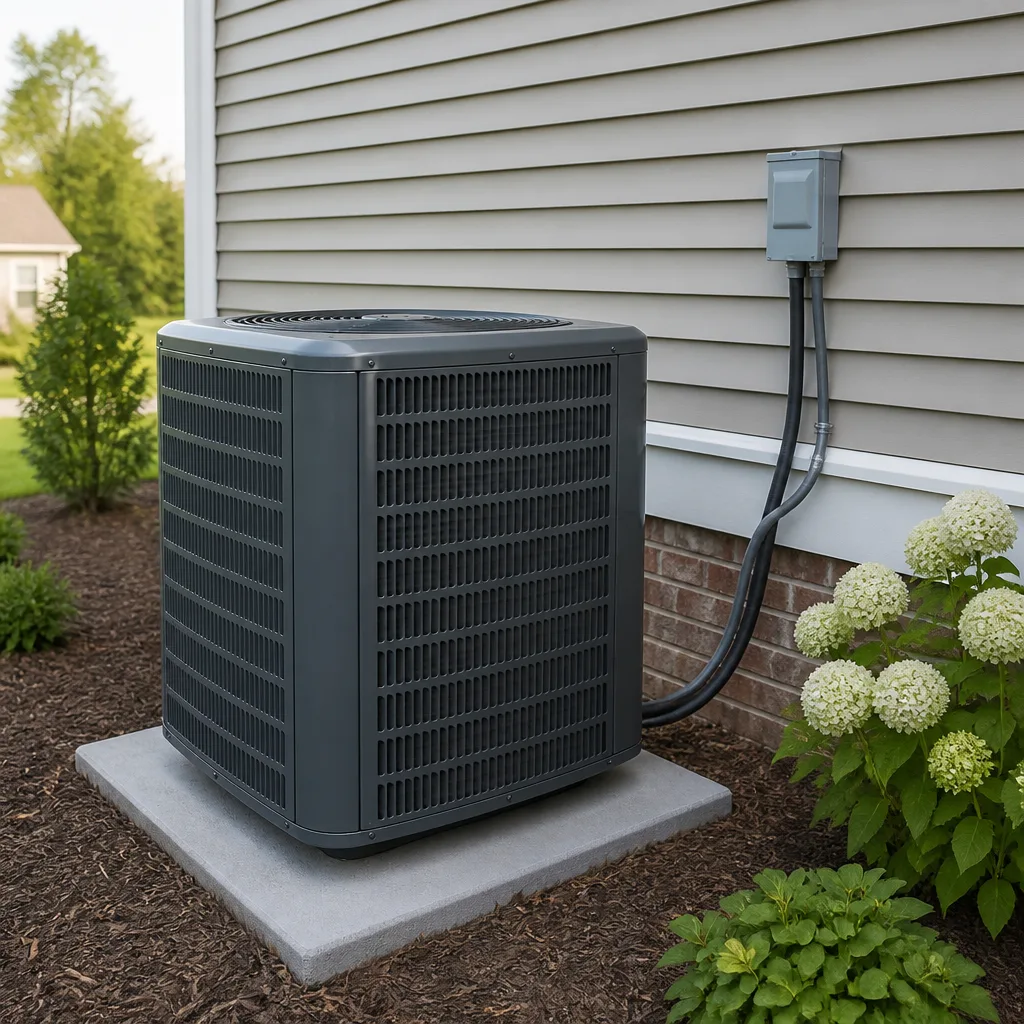 Goodman
Seasonal tune-up and full diagnostic on your Carrier, Trane, or Goodman system - readings shown to you before any repair is proposed
Diagnosis first, numbers second - you approve the repair price before a single part goes in.
Get your free estimateBryant Capacitor Replacement: The Alpharetta Owner’s Guide
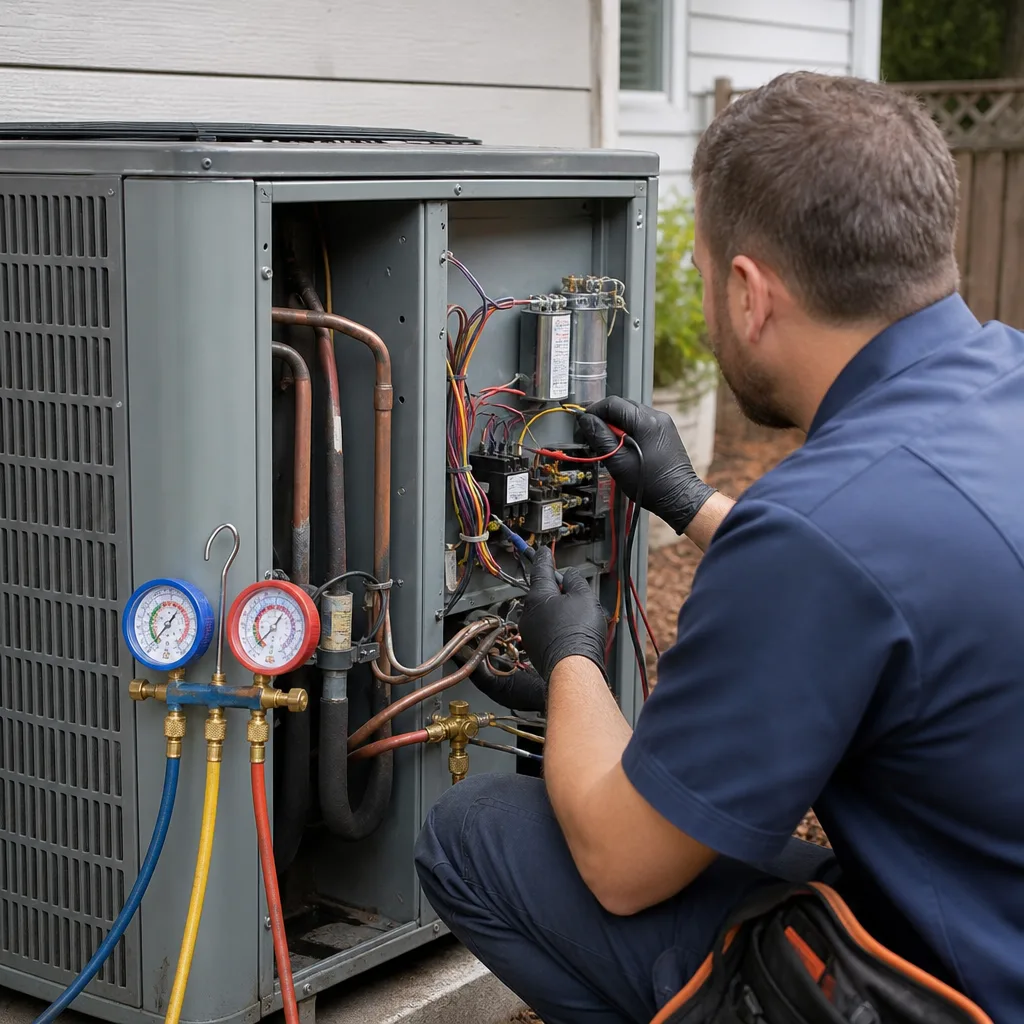
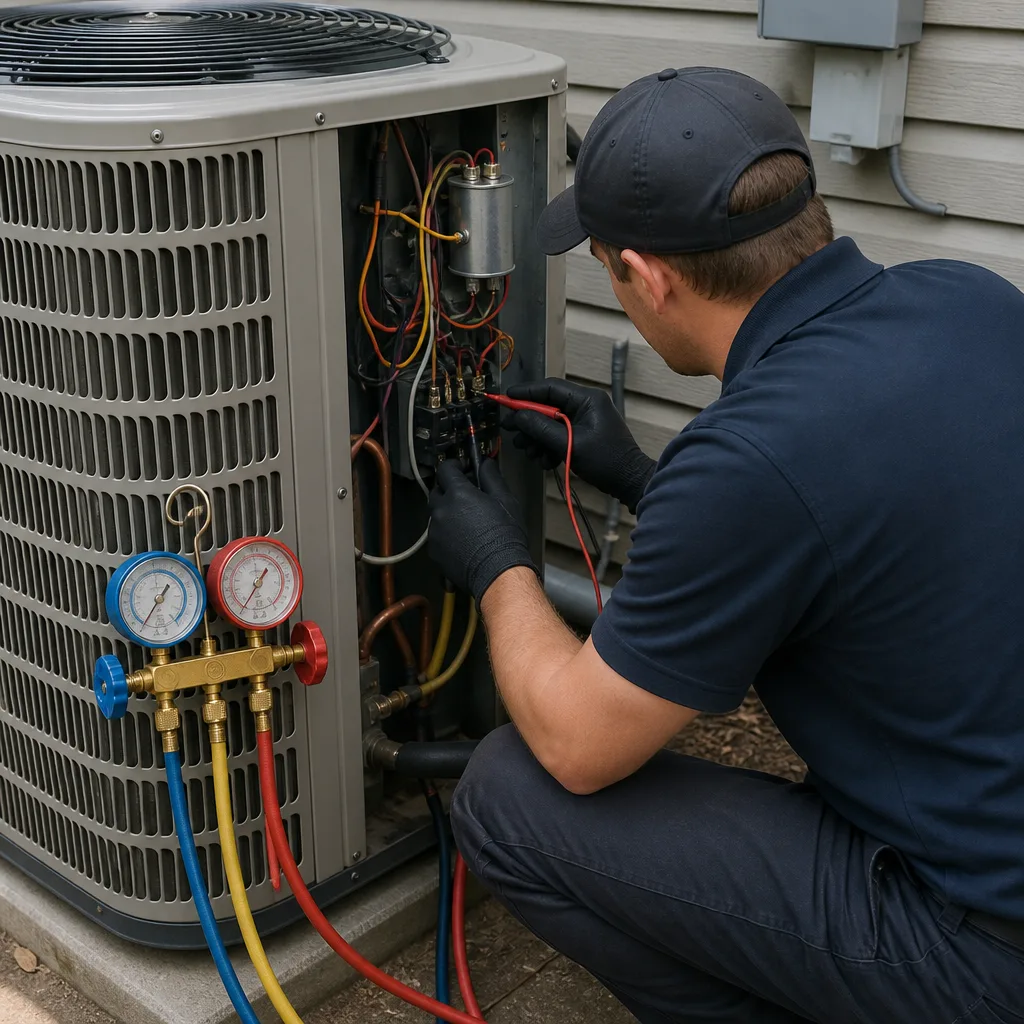
A Bryant capacitor replacement in Alpharetta typically runs $150 to $300 installed, depending on whether it’s a single or dual-run capacitor and how accessible your condenser unit is. We carry Bryant-compatible capacitors on our trucks and can usually complete the swap the same day you call. Most homeowners discover the problem when the outside unit hums but the fan won’t spin, or the compressor clicks and gives up after a few seconds. That humming sound is the motor straining against a capacitor that no longer has the stored charge to kick it into motion. Left alone, it burns out the motor, and a $200 part becomes a $900 repair.
Which Bryant Models This Applies To
Bryant uses capacitors across their entire residential lineup, from the entry-level Legacy series to the mid-tier Preferred and the top-end Evolution systems. The most common Bryant units we replace capacitors on in Alpharetta are the Legacy 13 SEER condensers and the Preferred 16 SEER heat pumps, though the Evolution variable-speed systems use capacitors too, just sized differently. Here’s the thing most homeowners don’t know: Bryant doesn’t manufacture their own capacitors. They source them from suppliers like GE, Titan HD, and AmRad, which means a quality aftermarket capacitor with matching specs performs identically to the OEM part at roughly half the parts cost. The label on your existing capacitor tells you everything: microfarad rating (usually 35/5, 40/5, or 45/5 for Bryant residential units), voltage rating (370 or 440 VAC), and shape (round or oval). Match those three numbers and the physical dimensions, and you have a correct replacement. Where people get into trouble is buying a 370V capacitor to replace a 440V unit because it’s a few dollars cheaper. In a Georgia attic where ambient temperatures hit 140 degrees in July, that lower-rated part degrades fast. We stock both OEM Bryant capacitors and quality aftermarket equivalents, and we’ll tell you the price difference before we touch anything.
Styles & brands we work with
Signs Your Bryant Capacitor Replacement Is Failing
- The outside unit hums but the fan doesn’t spin. The capacitor has lost enough charge that it can’t provide the starting torque to overcome the motor’s resting inertia. If you hear this, shut the system off at the thermostat and the breaker. Running it like this for days is how a weak capacitor becomes a seized compressor.
- The compressor clicks on, runs a few seconds, then shuts off. That’s the thermal overload protecting the compressor from the electrical strain of repeated failed starts. Each failed start cycle generates heat inside the compressor windings, and heat is what kills compressors in Alpharetta’s summer conditions.
- The AC runs but blows warm or weak air. A failing dual-run capacitor can still partially energize the fan motor while underpowering the compressor, so the system moves air but doesn’t actually cool it. Your electric bill climbs while the house gets warmer.
- Visible bulging, leaking, or rust on the capacitor itself. Capacitors are sealed cans. When the electrolyte inside breaks down from heat and age, it expands, and the top or sides bulge outward. Sometimes you’ll see a small amount of oily residue. Either one means the part is done.
- The unit won’t start at all after a power surge or brownout. Brownouts are common in Alpharetta during summer thunderstorm season, and a voltage drop can blow a capacitor outright while leaving the rest of the system untouched. If your AC worked fine before a storm and won’t start after, the capacitor is the first thing we check.
See the difference
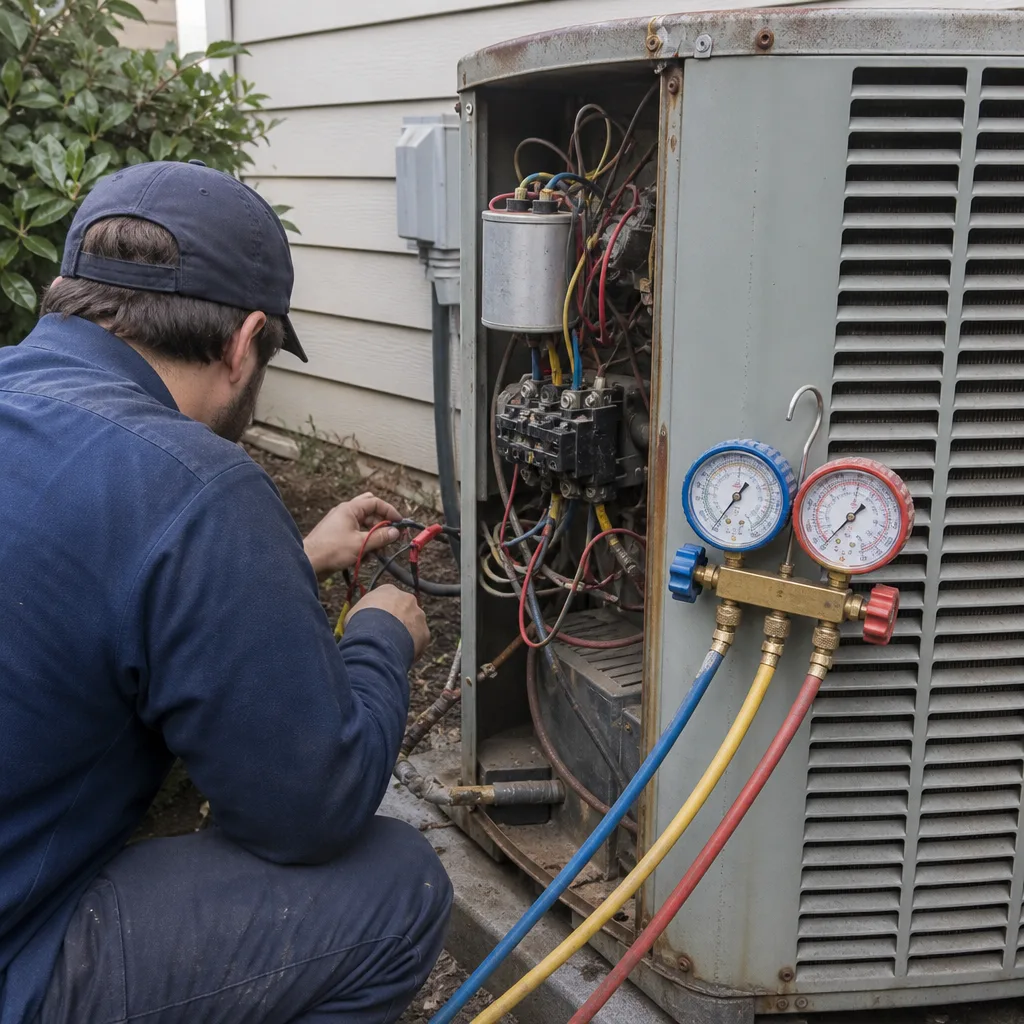 Before
 After
After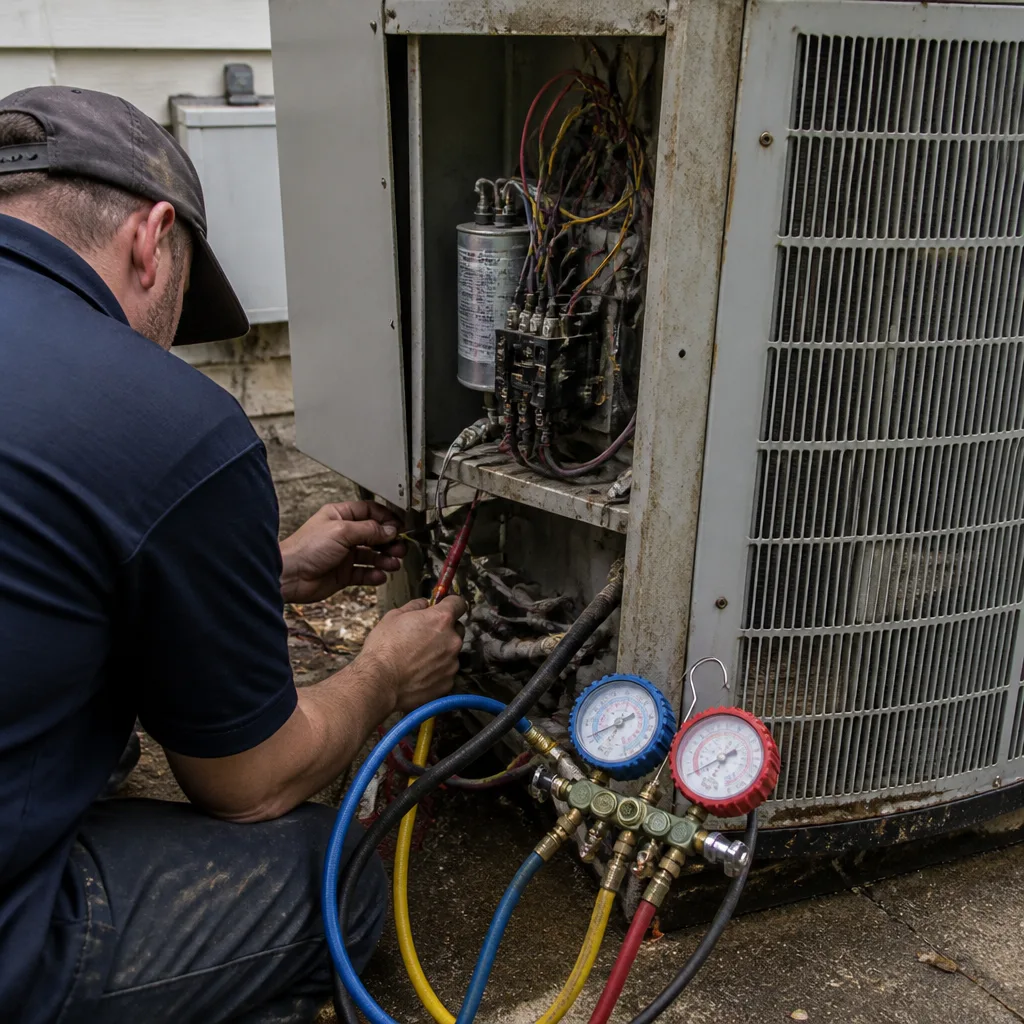 Before
 After
After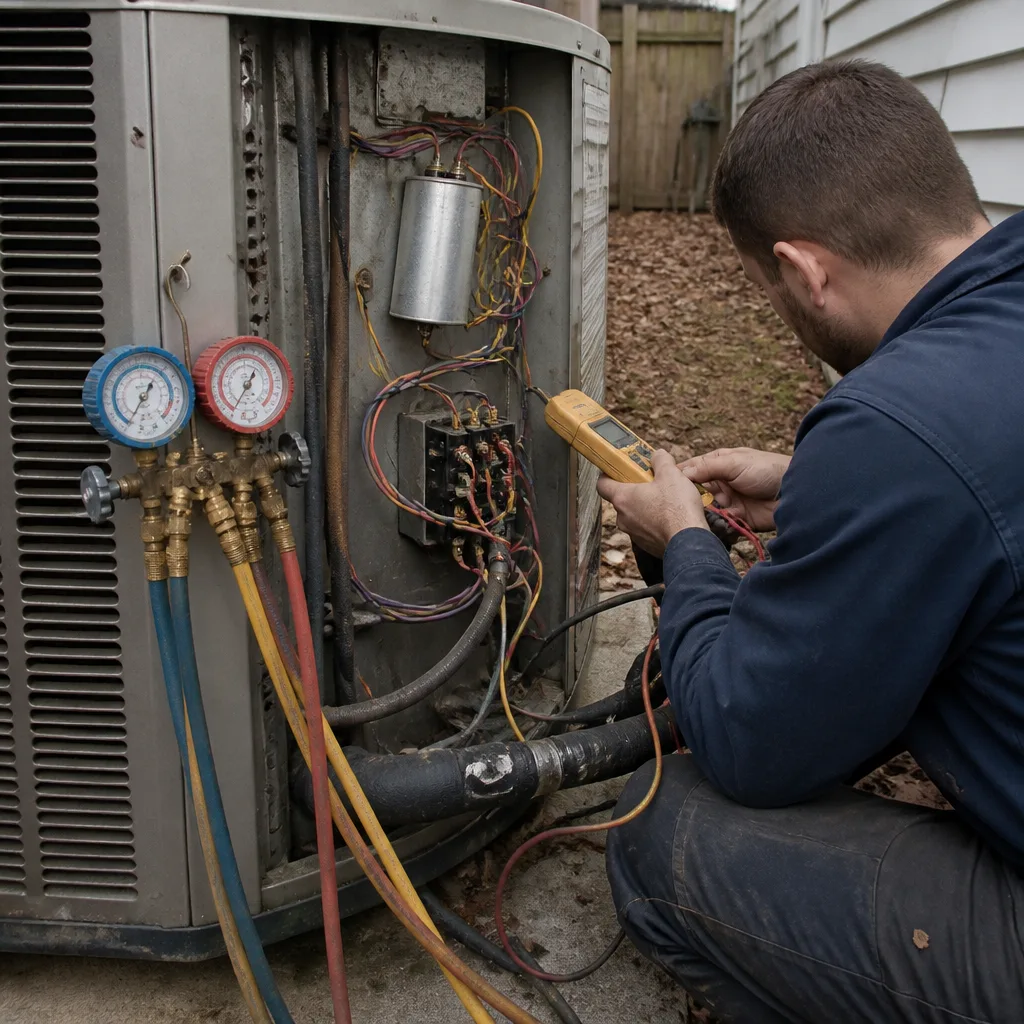 Before
 After
AfterReplacement Cost & What’s Included
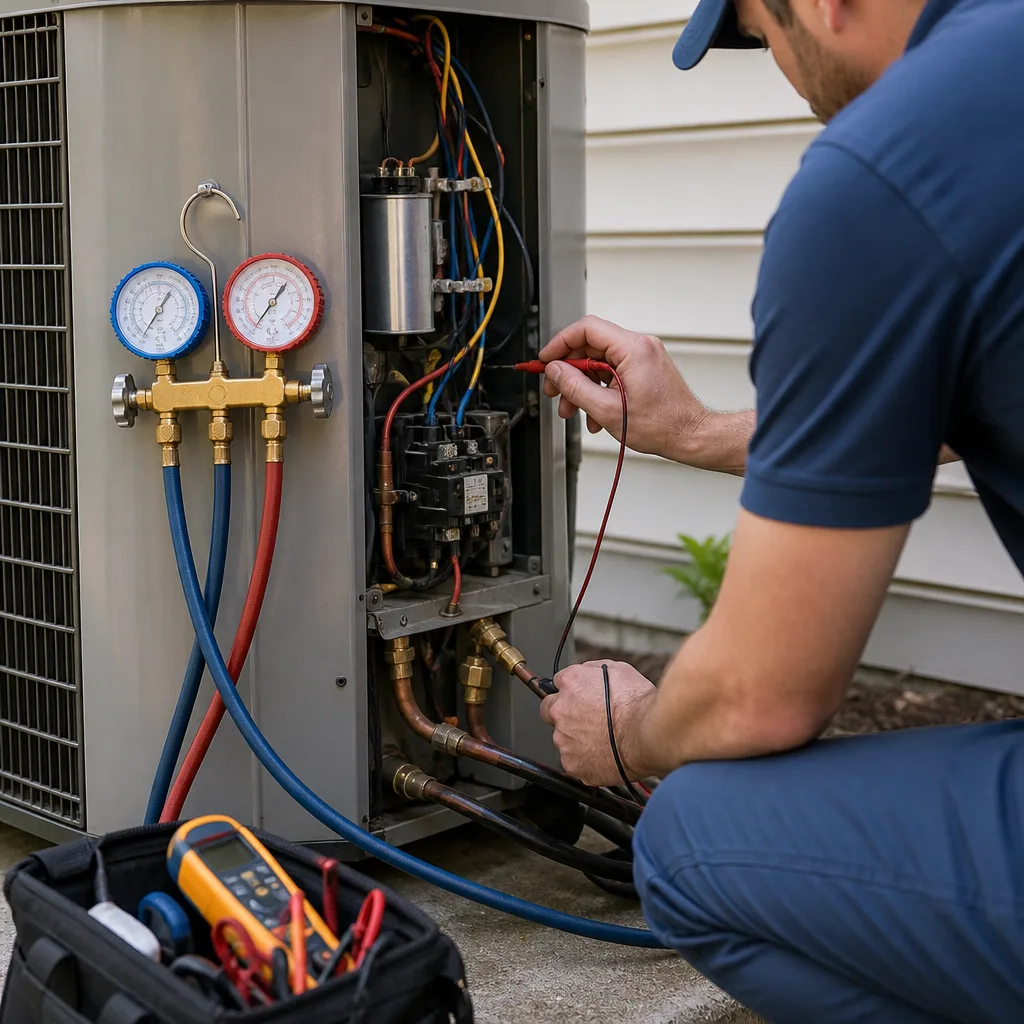
In Alpharetta, a Bryant capacitor replacement installed by Dalton Heating & Air runs $150 to $300 for most residential systems. The part itself is $30 to $80 for a quality single-run capacitor, or $40 to $90 for a dual-run, depending on the microfarad rating and whether you want OEM Bryant or an equivalent aftermarket brand. Labor accounts for the rest, and we don’t pad it: a capacitor swap is a 30 to 45 minute job on most condensers, tested and verified before we leave. What’s included is the diagnosis, the replacement capacitor, installation, testing of both the capacitor and the motor it feeds, and our written one-year guarantee on the repair. If that capacitor fails within 365 days, we come back and replace it at no charge. The only variable that might push it past $300 is a hard-to-access unit or a system that needs additional diagnosis because the capacitor wasn’t the only thing that failed.
DIY or Call Us?
Capacitors store electricity. Even with the power off, a capacitor holds a charge strong enough to knock you across your driveway or stop your heart. That’s not me being dramatic, that’s the physics of the part. Before anyone touches a capacitor, you have to discharge it properly with an insulated resistor, and then verify with a meter that it’s actually dead. Most homeowners don’t own the right tool for that, and the stakes for getting it wrong in a driveway in Alpharetta aren’t worth the money saved. What you can safely do is confirm the symptoms: listen for the hum, check for a tripped breaker, check for visible bulging if you can see the capacitor through the access panel without touching anything. Then call us. Marco Benitez has walked more than a few Alpharetta homeowners through exactly what he found before quoting a dollar amount. Tell me what it’s doing, and I’ll tell you what it needs, no guesswork, no markup on confusion. Call (229) 537-2086.
FAQs
A Bryant capacitor in the Alpharetta climate typically lasts 5 to 10 years, but Georgia heat and humidity push them toward the shorter end of that range. Every summer above 95 degrees with high attic or outdoor ambient temperatures accelerates the breakdown of the dielectric fluid inside the capacitor. If your unit sits in direct afternoon sun on the west side of the house, expect closer to 5 years.
No. A capacitor is a sealed component, and once the electrolyte inside has degraded, there is no way to rebuild or repair it. Replacement is the only option. The good news is that a capacitor is one of the least expensive parts in the entire system to replace correctly.
A Bryant capacitor replacement takes 30 to 45 minutes for a standard residential condenser. That includes removing the access panel, discharging the old capacitor safely, swapping in the new one, and testing the system through a full startup cycle. Call (229) 537-2086 for an exact quote, and we’ll give you a written price before any work starts.
Yes. Our Alpharetta trucks carry the most common Bryant capacitor sizes including 35/5, 40/5, and 45/5 dual-run capacitors in both 370V and 440V ratings. We also stock capacitors for Carrier, Trane, and Lennox systems, since those follow the same basic specifications. If your system needs an uncommon size, we can typically source it from a local Alpharetta supply house the same day.
If you’re hearing a hum, seeing a bulge, or your Bryant system just won’t start, call us before the capacitor takes the compressor with it. A capacitor swap is one of the cheapest repairs in HVAC, and catching it early is the difference between a $200 fix and a $6,000 replacement. Call (229) 537-2086 for written, upfront pricing and same-day service in Alpharetta. We show up inside the window, put the price in writing before any work begins, and guarantee the repair in writing for a full year.
Written by Marco Benitez, Owner, Dalton Heating & Air Alpharetta at Dalton Heating & Air Alpharetta, serving Alpharetta and nearby areas.