
 Furnace & heating
 AC repair
 Heat pumps
 Ductless mini splits
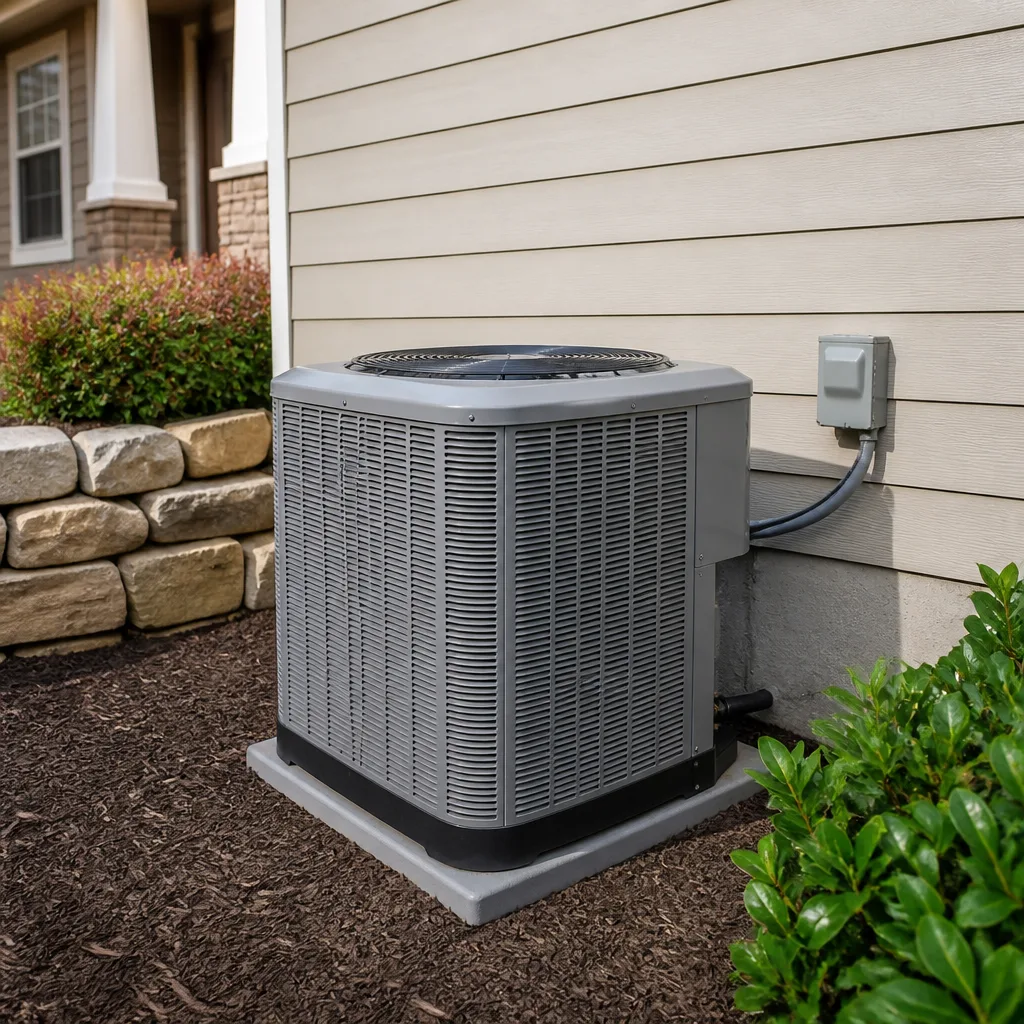 Carrier
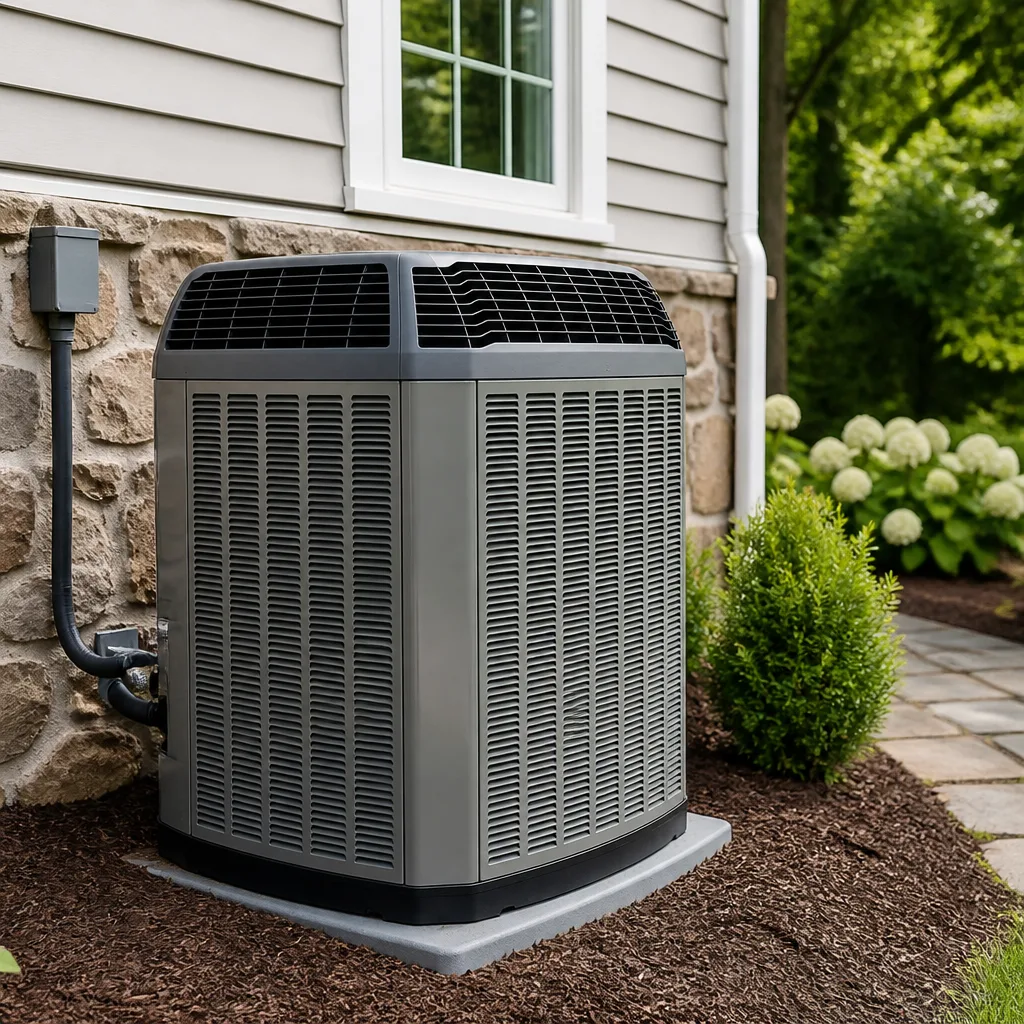 Trane
Trane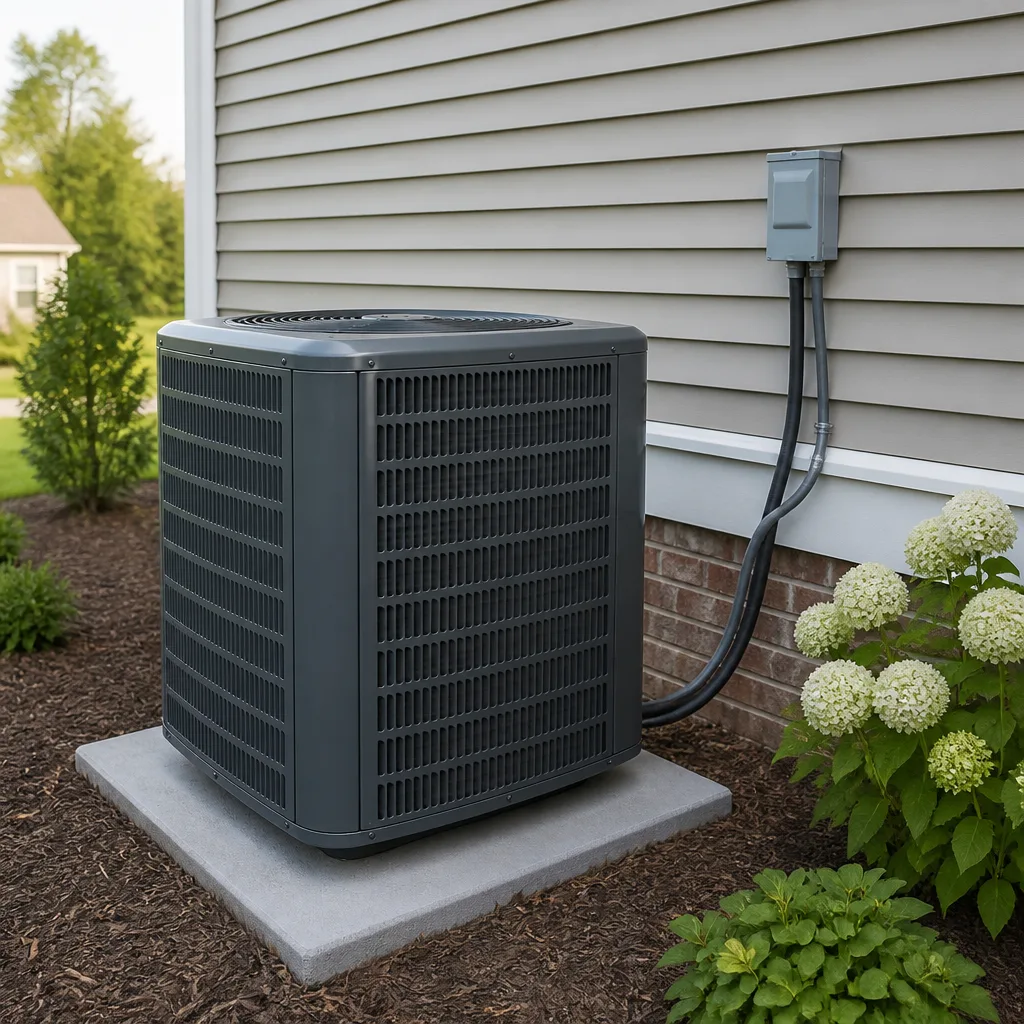 Goodman
Seasonal tune-up and full diagnostic on your Carrier, Trane, or Goodman system - readings shown to you before any repair is proposed
Diagnosis first, numbers second - you approve the repair price before a single part goes in.
Get your free estimateCarrier Capacitor Replacement: The Alpharetta Owner’s Guide
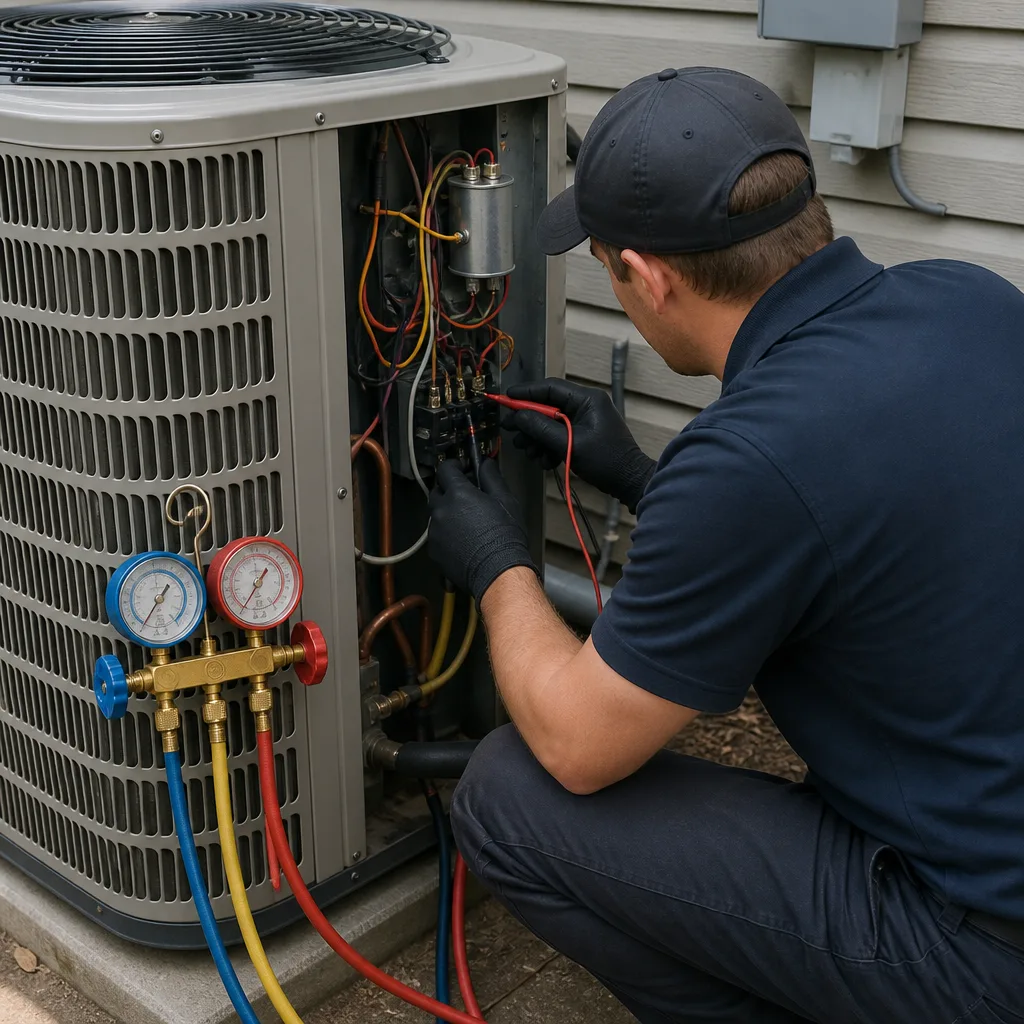
A Carrier capacitor replacement in Alpharetta typically runs $180 – $340 installed, depending on whether your system uses a single or dual-rated capacitor and how difficult the condenser cabinet is to access. Most calls are same-day, and we keep the most common Carrier capacitor ratings on the truck: 35/5, 40/5, 45/5, and 50/5 microfarad dual-run units. Here’s how this usually plays out: your outdoor unit hums but the fan won’t spin, or the compressor clicks and shuts off a second later. That’s the capacitor failing to deliver the starting jolt your system needs. In Alpharetta’s July heat, when the condenser is running hard for hours every afternoon, this part gives out more often than any other single component.
This page covers the Carrier models we see most, the exact symptoms of a weak capacitor, real installed pricing for Alpharetta, and an honest take on whether this is a DIY job.
Which Carrier Models This Applies To
Capacitor replacement applies to nearly every residential Carrier cooling product with a single-phase motor: the Comfort, Performance, and Infinity series condensers, most heat pump outdoor units, and the blower motor inside air handlers and furnaces. That means 24ABC, 24ACC, 24ANB, 25HBC, 25HCE, 25VNA (Infinity variable-speed), and the older 38 series units all rely on a capacitor somewhere. If your condenser was built in the last 20 years, there’s a good chance it’s running a GE or Mars dual-run capacitor from the factory, and a replacement is straightforward.
Here’s the compatibility gotcha we run into in Alpharetta all the time: the capacitor’s microfarad rating must match the original within ±5%, but the voltage rating can be higher than the original without issue. A 370V capacitor can replace a 370V or 440V original. But a 440V original should not be swapped for a 370V part. Carrier ships some Infinity units with 440V capacitors, and the aftermarket 370V units physically fit the same bracket. If a technician grabs the wrong one because it clips in, the capacitor runs hot and fails again in a season or two. We check the label on every job, not just the bracket.
OEM Carrier capacitors are fine, but honestly, the aftermarket units from AmRad (made in the USA, 5-year warranty) or Titan HD are what we install most often. The Carrier-labeled part costs 50 – 70% more and is often the same component with different ink on the shell. What matters is the microfarad rating, the tolerance, and the physical size. We explain this before we quote anything.
Styles & brands we work with
Signs Your Carrier Capacitor Replacement Is Failing
- Outdoor fan won’t spin, but you hear a hum. The capacitor isn’t providing the phase shift that gets the fan motor turning. If you’re outside and hear that low electrical buzz while nothing moves, that’s the classic symptom. Shut the system off at the thermostat to avoid overheating the compressor.
- Compressor clicks on then shuts off after a few seconds. The start winding isn’t getting enough of a charge to overcome the initial pressure in the refrigerant lines. That rapid on-off cycle, called short cycling, will eventually damage the compressor if it keeps happening.
- AC runs but air coming from vents isn’t very cold. A weak capacitor can let the system run while the compressor isn’t compressing at full capacity. You get lukewarm air and higher electric bills, and the unit runs more hours trying to keep up.
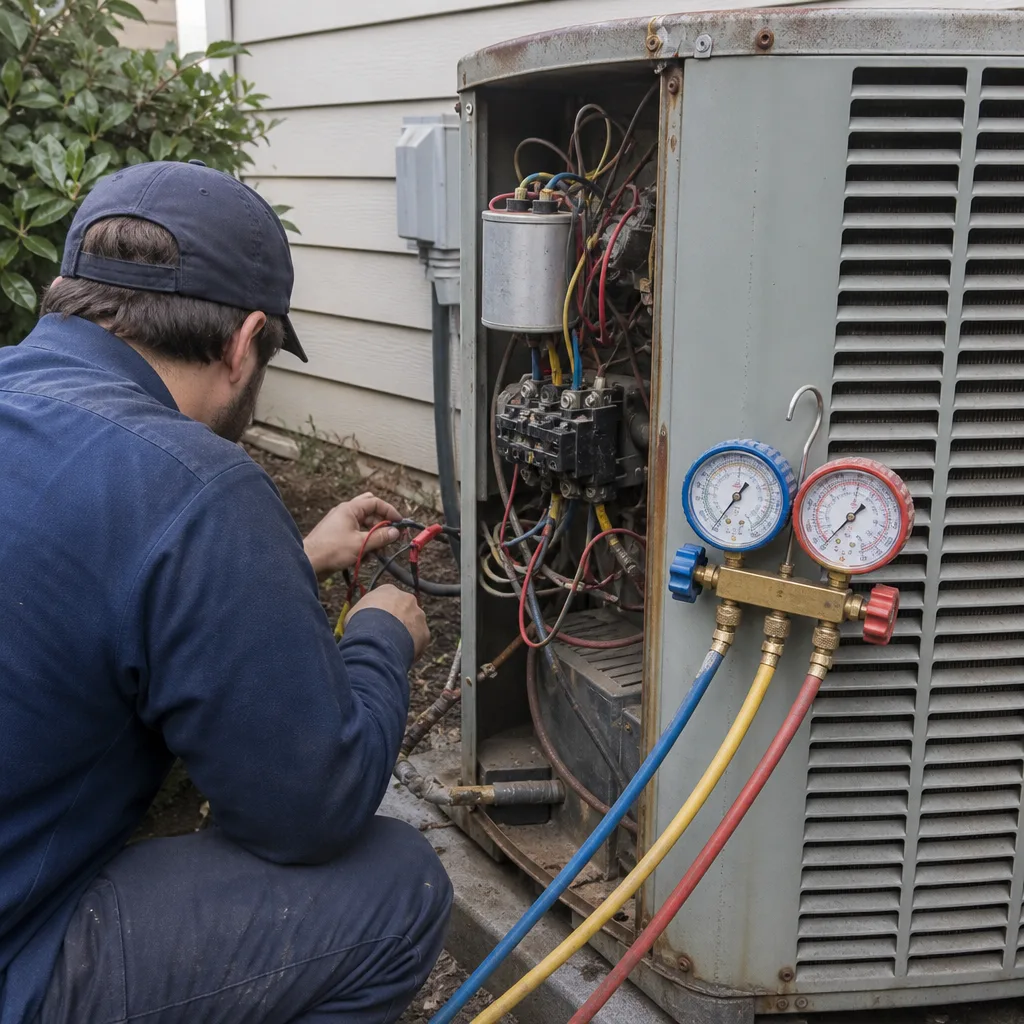
- The top of the capacitor is swollen or the case looks misshapen. Heat is the enemy of these parts, and Alpharetta gives capacitors a workout. The internal dielectric fluid breaks down with years of heat, the pressure builds, and the aluminum top domes upward. If you can see a bulge or a black spot near the terminals, it’s done.
- The capacitor is leaking oil. Inside every capacitor is a small amount of dielectric oil. When the case splits from pressure or age, that oil seeps out around the terminals. If you see any oily residue on the part, the capacitance reading has already gone off-spec.
See the difference
 Before
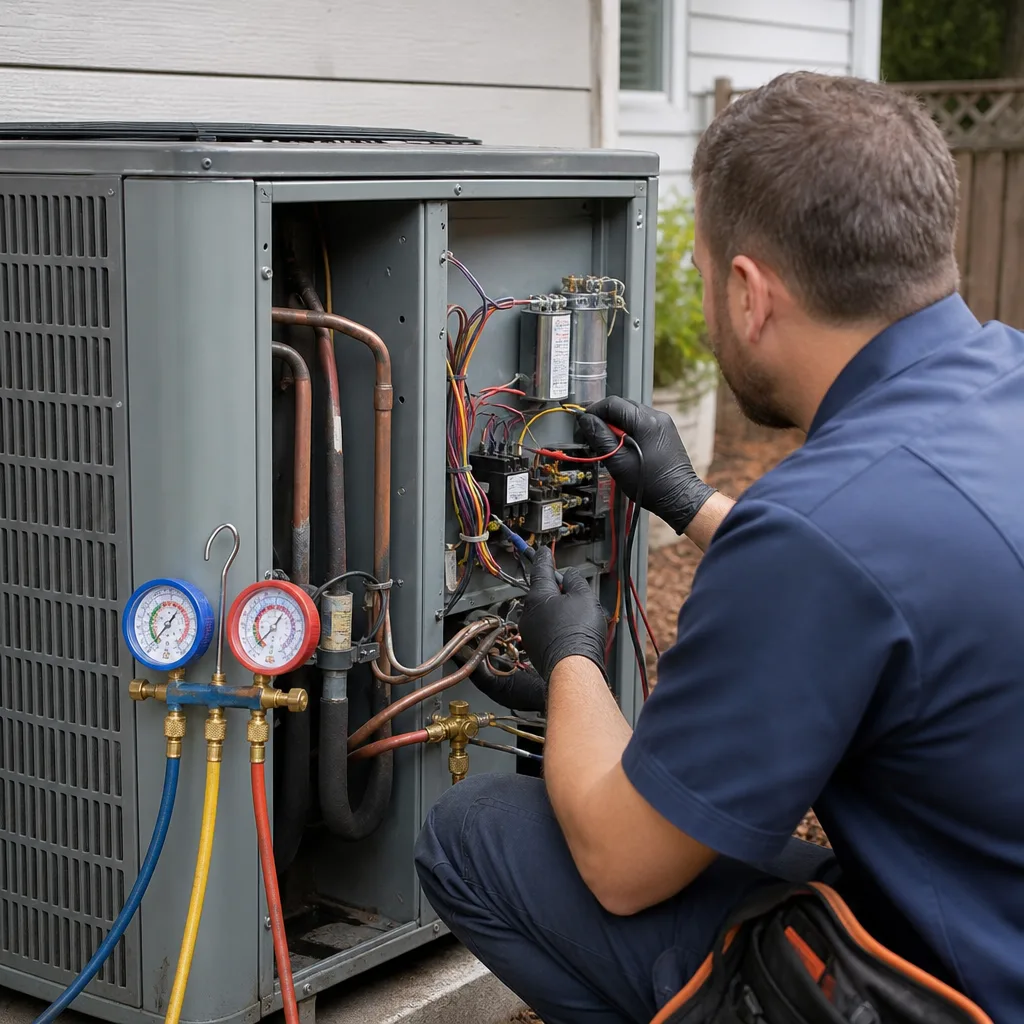 After
After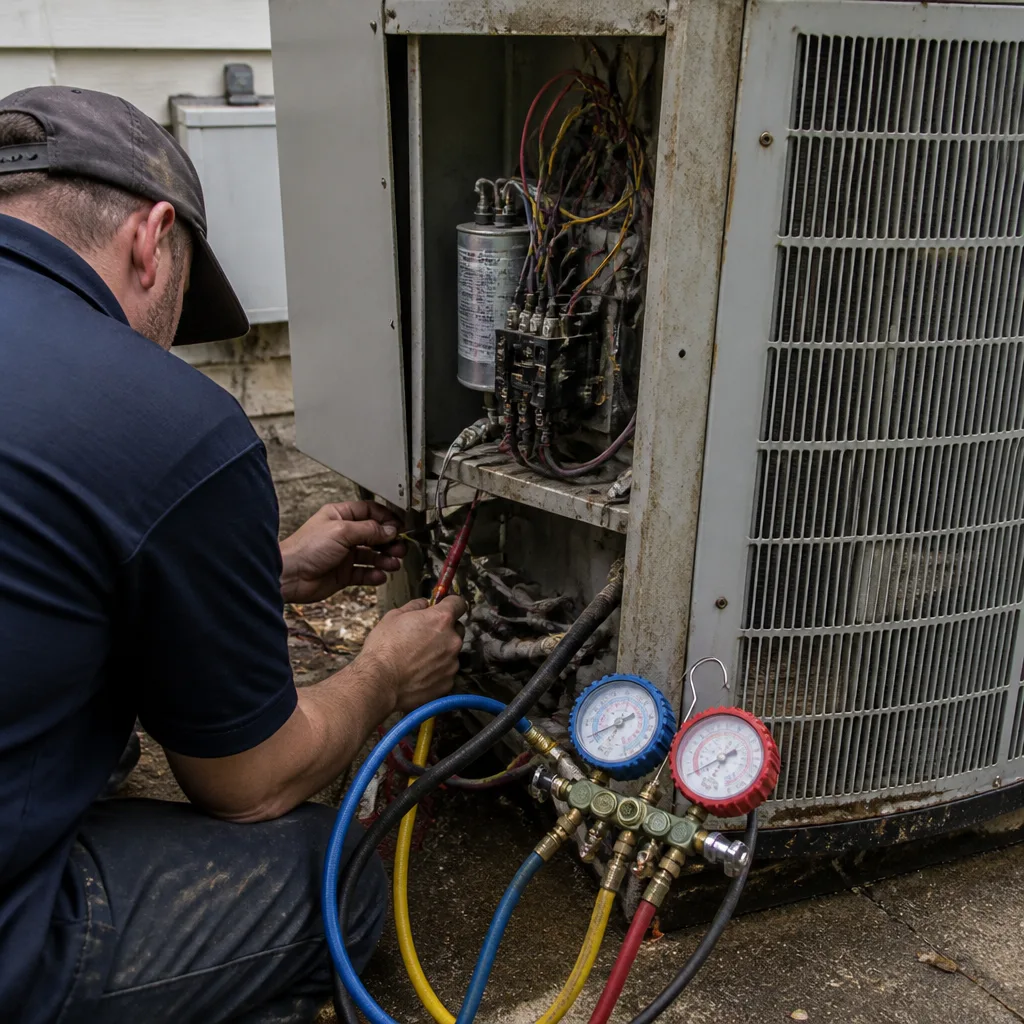 Before
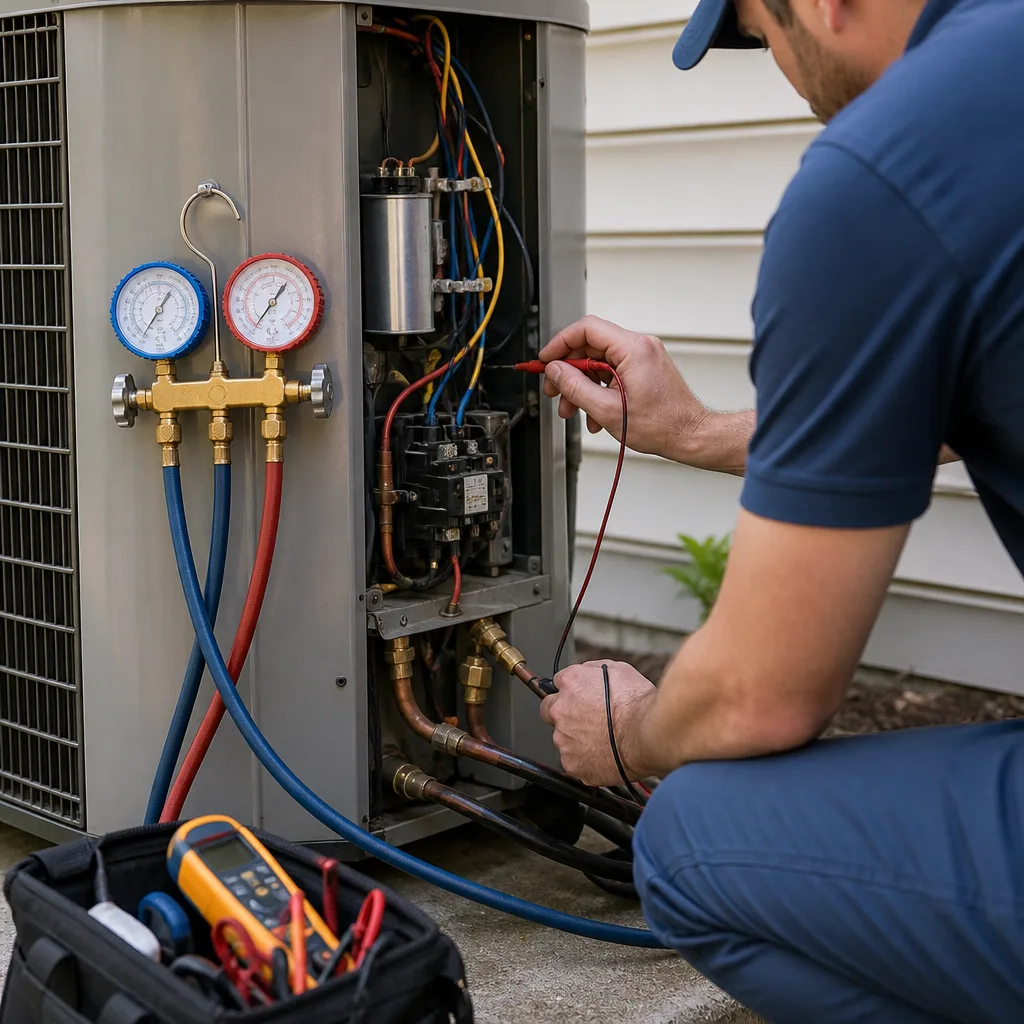 After
After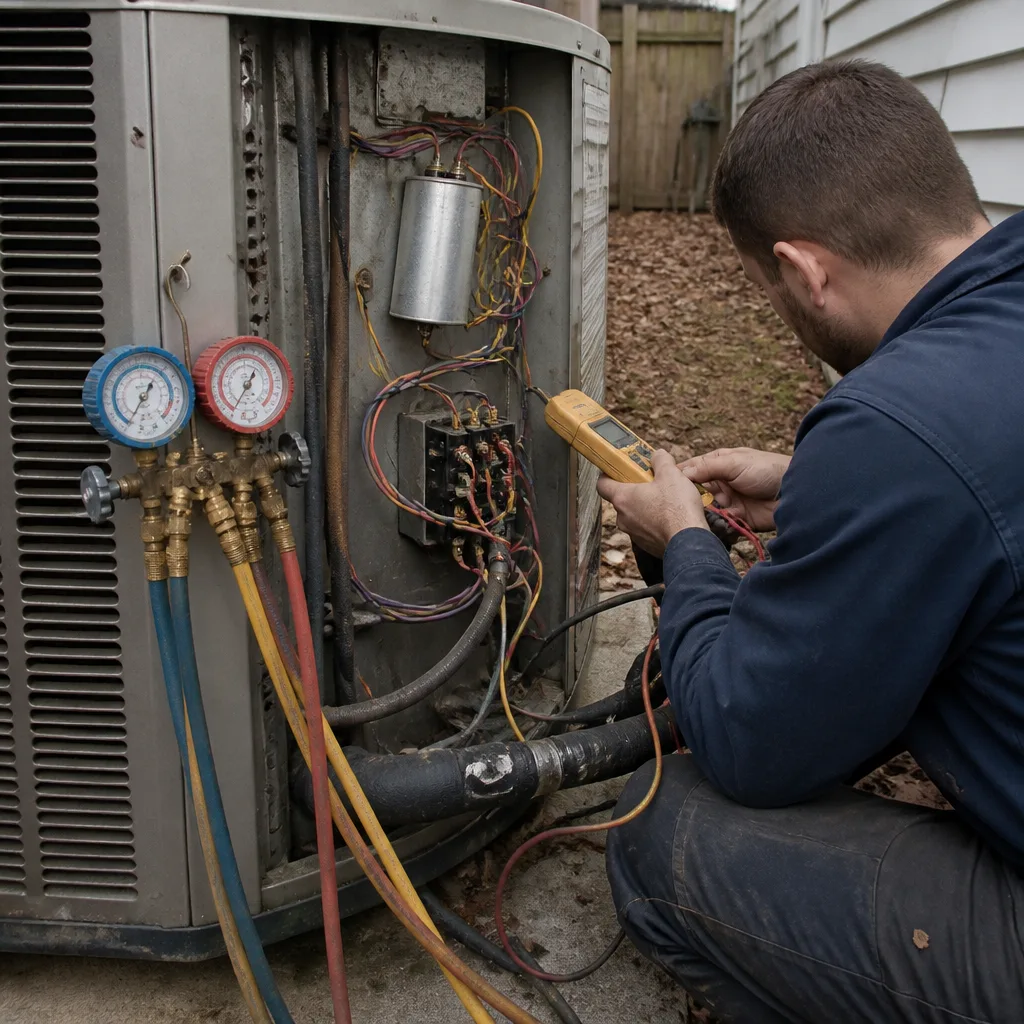 Before
 After
AfterReplacement Cost & What’s Included
In Alpharetta, a Carrier capacitor replacement installed by us runs $180 – $340. The part itself is a $25 – $75 item at supply-house pricing. What you’re paying for is a technician who shows up with the right microfarad rating on the truck, checks the existing part’s reading with a capacitance meter, and verifies the new part matches the label on your condenser before it goes in.
We write up the price before we turn a single screw: that’s a non-negotiable part of The Garrison Standard. The written number covers the part, the labor, the 5-minute test cycle to verify the system starts correctly, and our written repair guarantee. If that new capacitor fails within a year, we return and replace it at no charge. That’s the 365-Day Done Right Promise in plain terms. No overtime charge, no surcharge for showing up on a Saturday in July when it’s 94° outside.
Some companies will quote this job lower to get in the door, then “find” other issues. We don’t work that way. Marco Benitez, our owner, walks you through exactly what failed and why before he quotes a dollar. The price on paper is the price.
DIY or Call Us?
Here’s what you can safely check yourself: look at the capacitor through the condenser’s access panel grille (don’t open it). If you can see a bulge, a black scorch mark, or oil, that’s likely your problem. You can also listen for the hum-and-no-start described above.
Here’s what you should not do: open the access panel and start probing terminals. Capacitors store charge even after the power is off, and they discharge fast enough to hurt you badly. It is the most dangerous part to handle inside an HVAC system, bar none. That stored charge can remain even with the breaker off. A shorted capacitor can also burn you. We’ve seen homeowners mis-wire a new cap and blow the fan motor, turning a $250 repair into an $800 one. If your system is humming but not starting in Alpharetta, call us at (229) 537-2086. We diagnose the part for free and quote the job in writing before any work starts.
FAQs
Plan on 5 to 10 years. Alpharetta’s summer heat, with daily high temperatures in the 90s from June through August, shortens capacitor life compared to milder climates. The part degrades with heat and duty cycle. If yours is over 7 years old and the unit starts acting up, this is the first thing to check.
No. A capacitor is a sealed component; there’s no internal part worth salvaging. When the microfarad reading drops more than 6% below the rating on the label, the part is outside spec and gets replaced. There is no repair that makes economic sense.
The actual swap is a 20 – 30 minute job. We remove the access panel, verify the old capacitor’s reading with a meter, install the new part at the same microfarad rating, and run the system through a start/stop cycle to confirm the fan and compressor kick on correctly. Most calls are done in under an hour.
Yes. We carry the most common Carrier ratings: 35/5, 40/5, 45/5, 50/5, and a few 60/5 and 80/5 sizes for larger units. We also stock capacitors for Trane and Lennox systems, since those brands are common in Alpharetta too. If your unit takes an unusual size, our supply house in the area gets us the part within a few hours. Call (229) 537-2086 and we’ll tell you over the phone if we’re likely to have your size on the first visit.
Written by Marco Benitez, Owner, Dalton Heating & Air Alpharetta at Dalton Heating & Air Alpharetta, serving Alpharetta and nearby areas.