
Last updated October 16, 2026
 AC repair
 Furnace & heating
 Heat pumps
 Ductless mini splits
 Carrier
 Trane
Trane Goodman
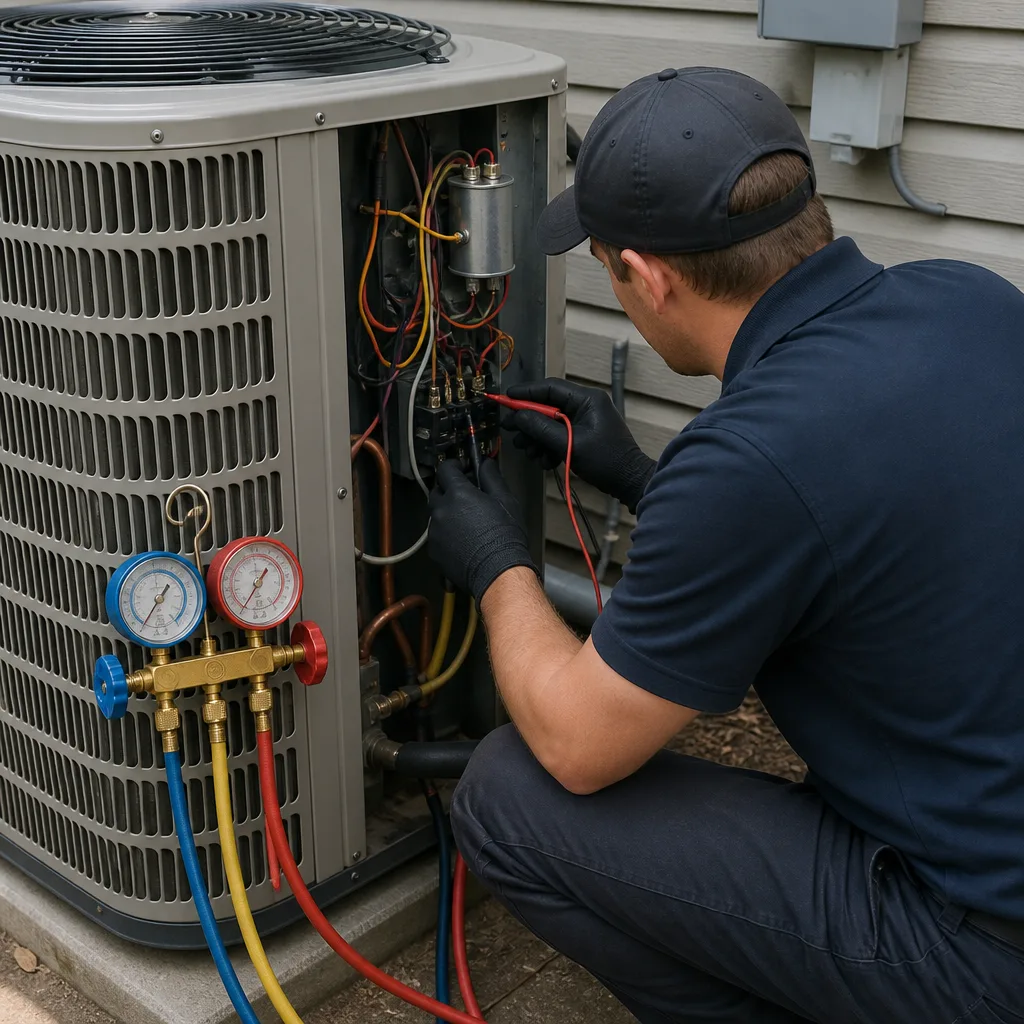
Seasonal tune-up and full diagnostic on your Carrier, Trane, or Goodman system - readings shown to you before any repair is proposed
Diagnosis first, numbers second - you approve the repair price before a single part goes in.
Get your free estimateSeasonal HVAC Care for Alpharetta: Year-Round Homeowner’s Guide
Alpharetta averages its first 90-degree day before May 15 most years. The standard “schedule your spring AC tune-up around Memorial Day” advice you’ll find on most HVAC websites assumes a climate that Alpharetta left behind years ago. By the time late May rolls around, your system has already been working against real heat for two to three weeks, often with a dirty filter from pollen season and a condenser coil that’s been collecting spring debris since March. This guide is built around Alpharetta’s actual weather pattern, which runs roughly eight months of cooling demand, a short shoulder season, and a heating window that’s compressed into about three months. For a broader look at the local climate and system options, see The Complete Guide to HVAC in Alpharetta. If you follow the month-by-month calendar below, you’ll stop chasing the wrong maintenance schedule and start matching what your equipment actually needs, when it needs it.
Styles & brands we work with
Quick Answer
Seasonal HVAC care in Alpharetta means scheduling your AC tune-up by early April, changing filters on a pollen-driven calendar that starts in February and runs through June, monitoring your system carefully during the August-September compressor failure window, and getting your furnace checked between late October and early November before the first cold snap. Most Alpharetta homeowners should budget for two professional maintenance visits per year, one in early spring for cooling and one in late fall for heating. You can use our AC Repair Maintenance Checklist for Alpharetta Homeowners to track what needs attention.
Table of Contents
- Alpharetta’s Real Seasonal Pattern, Not the National Template
- The Month-by-Month Maintenance Calendar That Actually Works
- Why August and September Are the Highest-Risk Months for Compressor Failure
- Filter Replacement on Alpharetta’s Pollen Calendar
- What to Do With Your Furnace During the Long Cooling Season
- The Shoulder-Season Window: When to Schedule Non-Emergency Work
- Common Mistakes to Avoid
- When to Call a Professional
- Frequently Asked Questions
- The Bottom Line
Alpharetta’s Real Seasonal Pattern, Not the National Template
Alpharetta sits in USDA hardiness zone 7b, which matters more than you might think. It means this city gets enough winter chill to kill off some pests but not enough to give your HVAC equipment a true off-season. Your air conditioner runs from roughly late March through late October. That’s not a season. That’s the majority of your year.
Here’s what the data actually shows for Alpharetta:
- First 90-degree day: Typically arrives before May 15. In some years, it’s been late April.
- First 80-degree day: Often hits in March, which means your AC is cycling well before spring officially ends.
- Last 80-degree day: Can stretch into November. Alpharetta’s cooling demand doesn’t stop when the calendar says fall.
- First frost: Usually mid-November. That gives you about a three-month heating window.
- Last frost: Usually early April, which means the transition from heating back to cooling is fast.
The problem with most HVAC maintenance advice is that it’s written for places with a real spring and a real fall. Alpharetta has what we’d call a compressed shoulder season: maybe six weeks in the fall and four weeks in early spring where your system is genuinely idle. The result is that the standard spring/fall tune-up calendar either misses the window entirely or forces you into a schedule that doesn’t match when your equipment is actually stressed.
What this means for homeowners: if you wait until “spring” to service your AC, you’re already late. If you wait until “fall” to service your furnace, you’re cutting it close to the first cold morning. The schedule below is built for Alpharetta’s actual calendar, not a national template.
The Month-by-Month Maintenance Calendar That Actually Works
Here is a month-by-month maintenance calendar built for Alpharetta’s real climate pattern. Follow this and you’ll never be the person who calls for AC repair on the first 90-degree day because the system won’t kick on.
January – February: Cooling System Dormant, Heating System Active
Your furnace or heat pump is doing the work now. The main tasks during this period are filter checks (monthly, without exception), listening for unusual sounds during the heat cycle, and watching your utility bill for unexplained spikes. If your furnace starts short-cycling, which means it turns on and off repeatedly without reaching set temperature, that’s an early warning sign of a limit switch issue or an airflow restriction. In Alpharetta’s January and February, your system runs enough that a small problem becomes a big one within two weeks.
Specific to Alpharetta: The city’s clay-heavy soil means many homes sit on crawl spaces or basements with higher humidity than you’d expect in winter. If your crawl space vapor barrier is damaged, that moisture gets pulled into the return air and makes your furnace work harder. We’ve seen humidity levels in Alpharetta crawl spaces spike to 70% even in January.
March – April: The Critical Cooling Prep Window
This is the most important maintenance window on the Alpharetta calendar, and it’s the one most people miss. March is when you should:
- Replace the air filter with a fresh one rated for pollen season. Alpharetta’s pollen starts in February with cedar and elm, then peaks in March and April with pine and oak. A MERV 8 to MERV 11 filter is the right range for most systems, but you need to check it every 30 days through June, not the 90 days most guides suggest.
- Clear the area around the outdoor condenser unit. Winter storms drop branches, leaves, and debris. Give the unit at least 18 inches of clearance on all sides. Trim back any shrubs that have grown over the winter.
- Schedule a professional cooling system inspection and tune-up. The ideal window is the last two weeks of March through the first two weeks of April. That gets your system inspected before the first real heat wave, while the HVAC companies in Alpharetta still have open scheduling.
- Check your condensate drain line. Algae and mold build up during the winter when the cooling side is dormant. Pour a cup of white vinegar down the drain line access point, then flush with water. If the line is already clogged, you’ll see water pooling around the indoor unit.
If you do nothing else this entire year, schedule your cooling tune-up in the March 15 to April 15 window. It is the single highest-leverage maintenance task on the Alpharetta calendar.
May – June: Peak Cooling Load Begins
Now your system is running daily. The focus shifts from preparation to monitoring. Change the filter every 30 days during this stretch because Alpharetta’s late spring pollen, particularly grass pollen, gets pulled straight into the return duct when the AC runs constantly. A filter that’s packed with pollen forces the blower motor to work harder, which drives up energy cost and shortens the motor’s life.
Also listen for these sounds during the cooling cycle: a metallic grinding or squealing from the outdoor unit often indicates a bearing issue in the condenser fan motor. A hissing sound near the indoor coil suggests a refrigerant leak. Neither is something to ignore. Refrigerant leaks don’t fix themselves, and running a system low on refrigerant is the fastest way to destroy a compressor. In Alpharetta’s June heat, a low-charge system will run continuously, fail to reach set temperature, and rack up an electric bill before you realize anything is wrong.
July – August: Maximum Stress Monitoring
This is when your system is at maximum sustained load. Alpharetta in late July and August regularly hits the mid-90s with humidity that makes it feel hotter. Your AC is running 12 to 16 hours a day. The most important thing you can do is watch for changes in behavior: longer run times than normal, a house that never quite reaches set temperature by late afternoon, or an electric bill that jumps without a corresponding change in usage.
In August specifically, we recommend checking the outdoor unit at least once a week. Look for ice forming on the refrigerant lines, which signals low charge or restricted airflow. Clear any grass clippings or leaves that have accumulated on the coil. And if you hear the compressor struggling to start, a hard-start kit may be needed, but that’s a professional diagnostic, not a DIY fix.
September – October: Post-Summer Recovery and Heating Prep
September is when you assess the damage from the cooling season. Schedule a post-summer inspection if you noticed any of the warning signs in July or August. This is also the window when you should start thinking about the heating side. In September, your furnace has been dormant for months. Here’s what to do:
- Run the furnace for 10 minutes on a mild day. Open a few windows if it’s still warm outside. You’re checking for a burning smell, which means dust has accumulated on the heat exchanger and needs to be cleaned. Better to find this out in September than on the first 35-degree morning.
- Replace the air filter if you haven’t since August. September and October in Alpharetta bring a second, smaller pollen season with ragweed and goldenrod.
- Check the carbon monoxide detector. This is non-negotiable if you have a gas furnace. Test the unit and replace batteries. If the detector is more than seven years old, replace the whole thing.
November – December: The Heating Window
The furnace is now in active use. The tasks here are straightforward: change the filter monthly, monitor for odd smells or sounds during the heat cycle, and make sure the exhaust flue is clear of debris. Alpharetta’s November and December bring a lot of leaf drop. If your furnace vents through the roof, check that the flue cap hasn’t been blocked by leaves or a bird trying to build a nest before the real cold arrives.
For heat pump owners, these months are when you should verify the unit is defrosting correctly. If you see a solid sheet of ice on the outdoor coil during a cold morning, the defrost board may be failing. That’s a repair call, not a maintenance item.
Why August and September Are the Highest-Risk Months for Compressor Failure
In our experience across Alpharetta, the compressor failure calls spike in late August and early September, not in the middle of July like most homeowners expect. There’s a mechanical reason for this. The compressor is the pump that circulates refrigerant through the system. It’s the single most expensive component in your AC, and when it fails, you’re usually looking at a full system replacement decision.
Here’s why the failure cluster happens in August and September:
- Cumulative heat damage: The compressor has been running at high temperature for months. Each hot day adds thermal stress to the internal windings. By late August, a compressor that was marginal in June has been pushed past its limit.
- Low refrigerant charge: A small leak that started in May gets worse through the summer. By August, the system is low enough that the compressor is running hot and starving for cooling refrigerant. That’s a fatal combination.
- Dirty condenser coil: All the accumulated pollen, grass clippings, and debris from the spring and summer acts as insulation on the coil. The compressor has to work harder to reject the same amount of heat. Amperage goes up, winding temperature goes up, and eventually the thermal overload trips, or the windings burn out entirely.
- Electrical surge damage from summer storms: Alpharetta gets frequent afternoon thunderstorms in July and August. A nearby lightning strike can send a surge through the system that weakens the compressor even if it doesn’t fail immediately.
What can you monitor to catch early stress signs before the compressor fails?
- Check the outdoor unit’s amp draw. If you have a smart thermostat or an energy monitor, watch for a gradual increase in the AC’s electrical draw over the summer. Rising amps under the same load is a sign of a struggling compressor.
- Feel the air temperature coming from the outdoor unit. On a hot day, the air blowing out of the top of the condenser should feel noticeably warmer than the surrounding air. If it feels only slightly warm, the system isn’t rejecting heat properly. That’s a dirty coil or a low charge, both of which stress the compressor.
- Listen for a hard start: If the unit buzzes for a second or two before the compressor kicks on, the start capacitor is weakening. A weak start means the compressor draws high current for a split second every cycle, and that repeated stress causes cumulative damage.
- Track run times: If the AC now runs 18 hours a day when it used to run 12 under the same conditions, something has changed. That extra run time translates directly into more compressor wear.
If you catch any of these signs in August, don’t wait until the compressor actually fails. A diagnostic call for AC repair in Alpharetta during the early warning stage is far less expensive than an emergency replacement after the compressor burns out.
Filter Replacement on Alpharetta’s Pollen Calendar
Most national HVAC guides tell you to change your filter every 90 days. That advice fails in Alpharetta, where the pollen season starts earlier, peaks harder, and lingers longer than in most of the country. If you follow the 90-day rule here, you’ll run your system on a clogged filter for the entire month of April, which is when Alpharetta’s pollen count hits its highest sustained levels of the year.
Alpharetta’s real pollen calendar looks like this:
- February: Cedar and elm pollen starts. The count is low but present. Start checking your filter every 30 days.
- March: Maple and alder join in. Pollen count rises steadily. First filter replacement of the season should happen by mid-March.
- April: Peak pine and oak pollen. This is the worst month in Alpharetta, with visible yellow dust on cars, porches, and outdoor condenser coils. Replace the filter at the end of April without exception.
- May: Grass pollen season kicks in. The count stays high. Check the filter at the end of May. If it’s visibly gray or yellow, replace it.
- June: Grass pollen continues and weed pollen begins. Replace the filter at the end of June.
- July – August: Pollen drops off, but now the AC is running constantly, pulling in dust and household debris. Monthly checks still apply.
- September – October: Ragweed and goldenrod bring a second, smaller pollen spike. Replace the filter in late September.
- November – January: Pollen is minimal, but the furnace is now circulating indoor dust and pet dander. Monthly checks during the heating season are still worth doing.
For most Alpharetta homes, that works out to six to eight filter changes per year, not the four that national guides suggest. If you have pets, add one or two more. At Dalton Heating & Air Alpharetta, we tell homeowners to buy filters in bulk and set a recurring reminder. A MERV 8 pleated filter is the right baseline for most systems, but check what your equipment manufacturer recommends. Higher MERV ratings capture more particles but also restrict airflow, which can strain older blower motors.
What to Do With Your Furnace During the Long Cooling Season
Your furnace sits idle for roughly eight months of the year in Alpharetta. That’s a long time for any piece of mechanical equipment to sit without running, and it creates a specific problem: when you finally switch to heat in November or December, accumulated dust on the heat exchanger burns off and produces that distinct smell that makes homeowners think something is on fire. It’s usually not a fire, but it’s also not something you want to experience on the first genuinely cold morning of the year.
Here’s what actually happens and what you should do about it:
The burn-off smell, explained. During the cooling season, your air handler pulls air across the evaporator coil. Dust, lint, and household particles get caught in the system. Some of that dust settles on the heat exchanger, which has been cold all summer. When the furnace finally fires, the heat exchanger gets hot, often above 400 degrees on a gas furnace, and the settled dust burns off. The smell is unpleasant but usually harmless. The fix is simple: run the furnace for 15 to 20 minutes on a mild day in October, with windows open, before you actually need heat. That burns off the dust in a controlled way rather than on the first freezing morning when you’re also trying to get the house warm.
Check the blower motor. The blower runs during both cooling and heating, but the load pattern is different. In cooling mode, the blower pulls warm air across a cold coil. In heating mode, it pushes cooler air across a hot heat exchanger. If the blower has developed a bearing issue during the summer, you might not notice it in cooling mode because the system is cooling adequately even if airflow is slightly reduced. In heating mode, the higher temperature differential makes a weak blower more obvious: the furnace may cycle on the high-limit switch, the air from the vents feels warmer than normal but weaker, or the system short-cycles. Any of those symptoms in the first week of heating season warrants a service call.
Inspect the flue and venting if you have a gas furnace. Make sure no bird or rodent built a nest in the flue pipe during the warm months. Alpharetta’s long warm season means wildlife has plenty of time to set up residence in an unused vent. A blocked flue is a carbon monoxide risk, which is why the CO detector check in October is non-negotiable.
Heat pump owners have a different set of instructions. If your system is a heat pump, there’s no separate furnace sitting idle. The same outdoor unit runs year-round. What you should do before heating season is verify the reversing valve is working. The reversing valve is the component that flips the system from cooling mode to heating mode. If it sticks, the system will blow cold air when it’s set to heat. You can test this by switching the thermostat to heat on a mild day and confirming warm air comes from the vents within a few minutes. If you get cold air, call for service before the first real cold weather. For more on this equipment type, see our page on heat pump installation in Alpharetta.
The Shoulder-Season Window: When to Schedule Non-Emergency Work
If you need non-emergency work done, such as a system inspection, duct cleaning, a repair that isn’t urgent, or a replacement quote, the late October to early November window is when you’ll get the fastest scheduling and the most attention from HVAC companies in Alpharetta. Here’s why: the cooling emergency calls have dropped off by late October, but the first real cold snap hasn’t hit yet. Technicians have availability. Dispatch boards have open slots. You can schedule on your terms rather than waiting for the next available emergency slot.
This window typically runs from roughly October 20 through November 15 in Alpharetta. It’s not a hard date range, but if you’re planning to replace a system or get a full diagnostic on an aging unit, aim for this period. You’ll get a faster appointment, and the technician will have time to do a thorough job rather than rushing to the next no-cooling call.
The same logic applies in reverse: late February through mid-March is the second-best scheduling window, after the heating season winds down but before the first warm spell triggers AC calls.
If you do need a full system replacement, you’ll want a written load calculation done on your home, not a rule-of-thumb square footage estimate. That’s part of the Dalton Heating & Air Alpharetta home service process: we measure the actual heat gain and loss of your specific house, then match the equipment to the load. That’s how you avoid the common Alpharetta problem of an oversized AC that cools the house fast but never removes the humidity, leaving it clammy even at 72 degrees.
Common Mistakes to Avoid
- Scheduling your AC tune-up in June. By June in Alpharetta, your system has already been running for weeks, and HVAC companies are booked with emergency calls. The first 90-degree day has already happened. You’ve missed the window.
- Following the 90-day filter change rule. Alpharetta’s pollen season runs from February through June with a secondary spike in September and October. A 90-day schedule means you’re running a clogged filter through the worst months.
- Ignoring a burning smell on the first cold day. If the smell lasts more than 20 minutes or is accompanied by visible smoke or a detector alarm, it’s not just dust burn-off. Call a professional. If you have a gas furnace, this is a carbon monoxide risk, not just an unpleasant odor.
- Skipping the carbon monoxide detector check. Every year, we see Alpharetta homes with old, dead, or missing CO detectors. A gas furnace produces carbon monoxide as a byproduct of combustion. If the heat exchanger is cracked, that gas enters your living space. Test and replace detectors before heating season.
- Turning off the AC completely when you leave for a summer trip. Alpharetta humidity doesn’t take a vacation. If you set the AC to “off” for a week in July, you’ll come home to a humid, mold-prone house. Set it to 80 to 82 degrees instead. That keeps the air circulating and the humidity under control without wasting energy.
- Waiting until the compressor fails before calling for repair. The warning signs, such as longer run times, weak airflow, or a struggling start, show up weeks before total failure. A repair during the warning window is usually a few hundred dollars. A compressor replacement after failure is a few thousand, and it often makes more sense to replace the whole system at that point.
- Letting shrubs and grass grow up against the outdoor condenser unit. The condenser needs airflow to reject heat. When Alpharetta’s fast-growing summer landscaping crowds the unit, the coil can’t breathe, the compressor works harder, and the system runs hotter. Keep 18 inches of clearance minimum.
When to Call a Professional
Some maintenance tasks are safe and sensible for homeowners: changing filters, clearing debris, trimming vegetation, testing CO detectors. But when it comes to the mechanical work, the line is clear. Our DIY vs Professional HVAC: The Alpharetta Homeowner’s Decision Guide breaks down exactly where to draw that line. If you hear a grinding, squealing, or buzzing from the outdoor unit, don’t open the panel. If you suspect a refrigerant leak because the system isn’t cooling and you see ice on the lines, don’t attempt a repair. Refrigerant is pressurized and regulated, and handling it requires EPA certification. If your gas furnace smells like rotten eggs, that’s the odorant in natural gas, and you should leave the house and call your gas utility immediately, then call for service.
Dalton Heating & Air Alpharetta offers free estimates in Alpharetta. Call (229) 537-2086 and a live person will answer, 24 hours a day, 7 days a week.
Frequently Asked Questions
Most HVAC companies in Alpharetta charge between $80 and $200 for a standard cooling or heating tune-up, depending on the scope and whether it’s part of a maintenance agreement. At Dalton Heating & Air Alpharetta, the price is always in writing before any work starts, on every job, without exception. Call (229) 537-2086 for a specific quote on your system.
Schedule your AC tune-up between March 15 and April 15. That’s before the first sustained 90-degree days but after the worst of the winter weather has passed. If you schedule in June or July, you’ll be waiting behind emergency repair calls, and your system will already have been running at load for weeks with whatever issues it’s carrying.
Every 30 days during the peak pollen months of March through June, and every 60 to 90 days during the rest of the year, depending on pets and household dust. Alpharetta’s pollen season is earlier, longer, and more intense than national guides assume, so the 90-day rule is not sufficient here.
If the repair cost approaches 30% of the cost of a new system and the unit is more than 10 to 12 years old, replacement usually makes more financial sense. If the system is less than 10 years old and the repair is a single component, such as a capacitor or a contactor or a fan motor, repair is typically the right call. A written diagnostic from a professional who has actually measured the system’s performance will help you make this decision with real numbers rather than guesses. Dalton Heating & Air Alpharetta provides written pricing and a written guarantee on every repair.
During the shoulder season in late October to early November, same-day or next-day scheduling for non-emergency work is usually possible. During the peak cooling season from June through August, same-day maintenance slots are rare because emergency no-cooling calls take priority. Call (229) 537-2086 and a live person will tell you exactly what’s available.
That smell is usually dust that has settled on the heat exchanger during the long warm season and is now burning off the first time the furnace fires. It should dissipate within 15 to 20 minutes. If it lasts longer, smells like gas or plastic, or is accompanied by smoke, shut the system off and call a professional. For gas furnace issues specific to this area, see our page on furnace repair in Alpharetta.
The Bottom Line
Alpharetta’s HVAC season doesn’t match the national maintenance calendar. You’re cooling from March through October, heating from November through February, and the transitions are fast. The highest-value moves are: schedule your cooling tune-up by mid-April, change filters on the February-through-June pollen schedule, monitor for compressor warning signs in August and September, test the furnace in October before you need it, and use the late-October shoulder season for any non-emergency work. If you do these things, you’ll avoid most emergency repairs, extend the life of your equipment, and keep your house comfortable through every month of the Alpharetta year. For more guides & resources, visit our blog.
Written by Marco Benitez, Owner at Dalton Heating & Air Alpharetta, serving Alpharetta since 2003.
See the difference
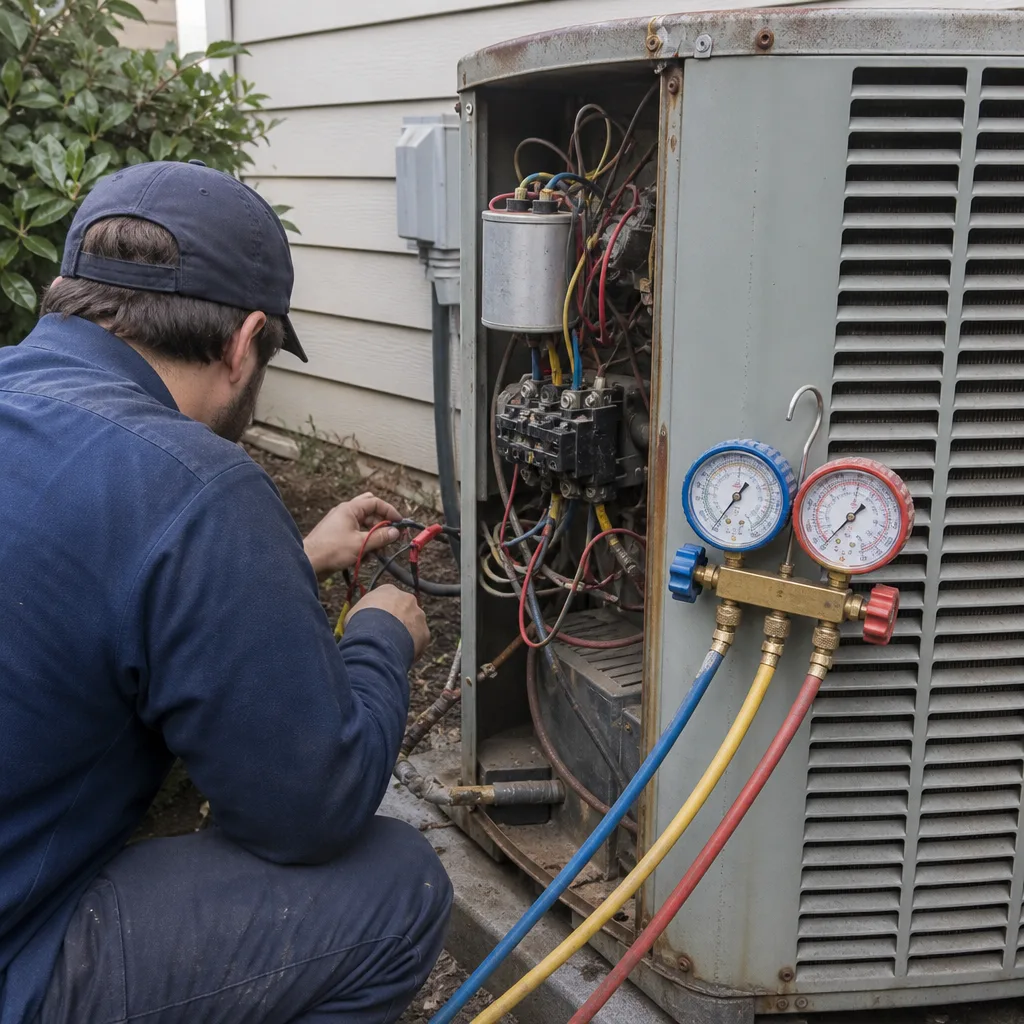 Before
 After
After Before
 After
After Before
 After
After